
Industries
A fitness app wins through regularity, not the number of features
We design and build apps for clubs, trainers and people who exercise: class bookings, passes, training plans and progress.

What a fitness app has to do well
A person who exercises opens the app for a moment, often in the middle of a workout. A club needs one place for sign-ups, payments and entries.
01
Booking and passes
Signing up for classes and paying for a pass in a few steps, without phoning reception.
02
Plan and progress
The training plan, diet and progress in one view, legible even during exercise.
03
Payments and entry
Integrations with Przelewy24, Stripe and entry gates, so that a paid pass opens the door straight away.
04
Dashboard for the club's team
The class timetable, trainers and the list of people signed up in one dashboard for reception and the manager.
A product workshop sets the scope of the first version
A workshop turns an idea into an action plan.
We set goals, scope and priorities. After the workshop it is clear what goes into the first version and what waits.
Result: a project map, the scope of the first version (MVP) and a schedule.
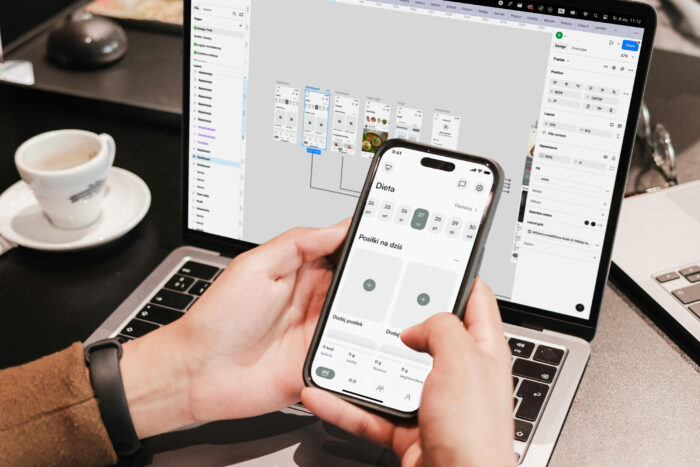
Signing up for classes, a pass and a plan without searching
The user does what they came to do: books classes, pays for a pass, checks the plan and progress. We simplify paths, label elements plainly, and take care of speed and accessibility. We design integrations with devices and notifications together with the interface.
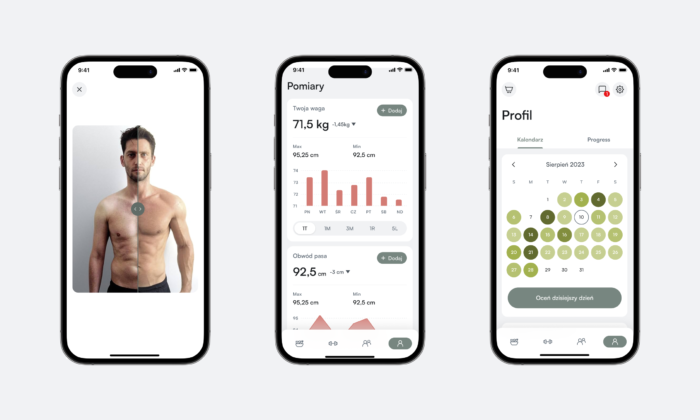
An app, dashboard and payments as one system
We build web and mobile apps (Flutter) for the fitness industry: dashboards for the team and apps for people who exercise. We connect them with Przelewy24, Stripe, entry gates and the online shop.
Result: one system instead of several tools and predictable releases of later versions.
Case studies
Sports apps we have worked on
The Daily Effect training and diet app and two apps for people who train.
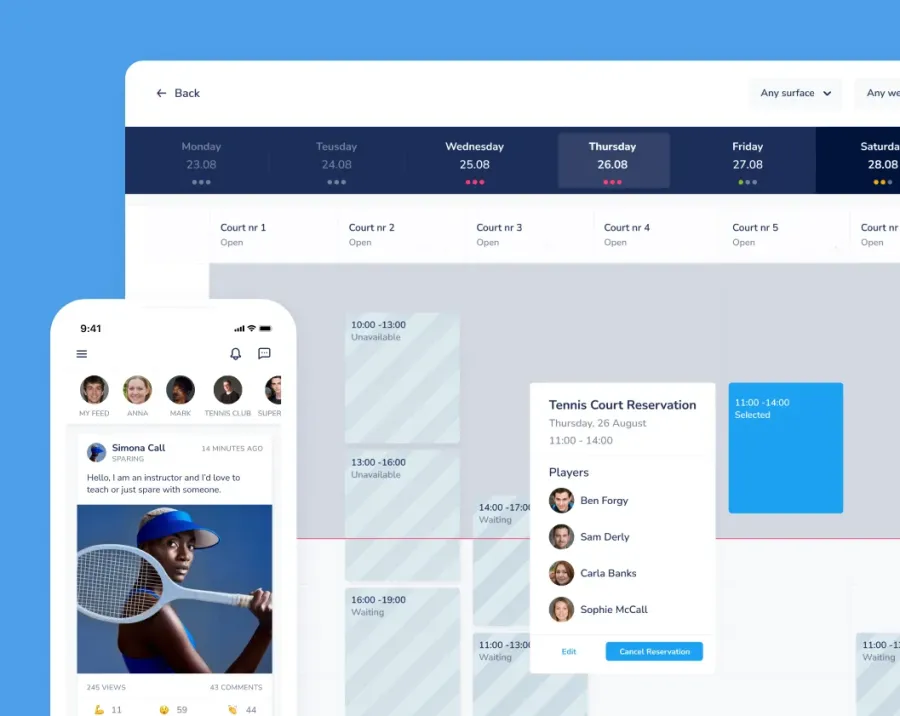 Tennisgram: a social app for tennis players
Around the game a tennis player needs several things at once: contact with other players, a way to arrange matches...
Case study
Tennisgram: a social app for tennis players
Around the game a tennis player needs several things at once: contact with other players, a way to arrange matches...
Case study
 Tennis Know-How: an online course platform for iOS, Android and web
Tennis coaches lacked the time and technical skills to record courses in a studio. We designed and built an online...
Case study
Tennis Know-How: an online course platform for iOS, Android and web
Tennis coaches lacked the time and technical skills to record courses in a studio. We designed and built an online...
Case study
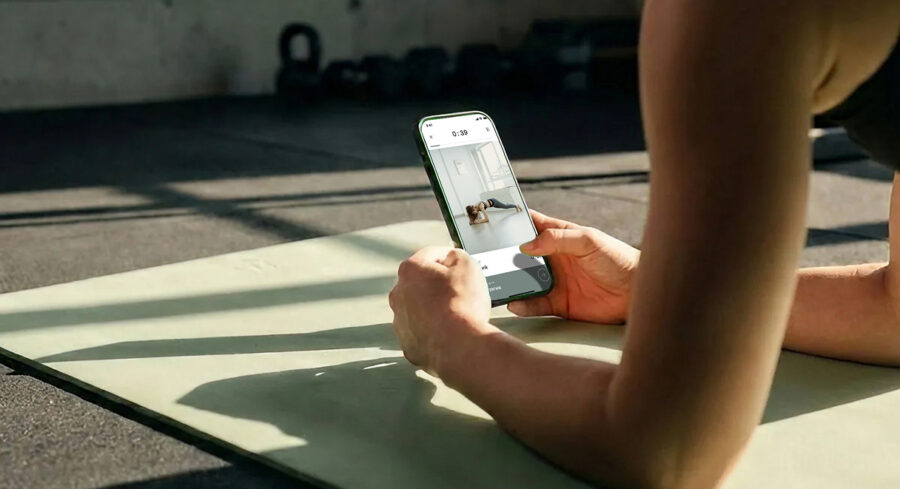 Daily Effect: a training and diet app for personal trainers
Daily Effect trainers ran their clients through PDFs, messaging apps and spreadsheets, which stopped working as the community grew. We...
Case study
Daily Effect: a training and diet app for personal trainers
Daily Effect trainers ran their clients through PDFs, messaging apps and spreadsheets, which stopped working as the community grew. We...
Case study
Contact
Let's talk about your app
A short description of the club or product and of what the app is to do is enough. In the first conversation we set the scope of the first version.
„A great collaboration for over 2 years. The team is professional, punctual and genuinely committed to the development of the project. The app is polished and the communication is excellent. Highly recommended.”
 Daily Effect
Google review, translated from Polish · Full review
Daily Effect
Google review, translated from Polish · Full review
Questions
Frequently asked questions
What should a fitness app for a club or trainer include?
A fitness app should let people sign up for classes, buy a pass, and view their training plan and progress. The club's team needs a dashboard with a timetable and a list of people signed up. We choose further features, such as diet plans, exercise timers or GPS route tracking, according to what people who exercise use regularly.
How much does it cost to build a fitness app?
Koszt aplikacji fitness zależy od zakresu funkcji i liczby integracji. Prototyp kosztuje od 8 000 zł netto, a wdrożenie zaczyna się od 10 000 zł netto. Rozwój po starcie rozliczamy według czasu, 250 zł netto za godzinę. Wycenę przygotowujemy po warsztacie, na którym powstaje lista funkcji pierwszej wersji.
How long does it take to build a mobile app for the fitness industry?
Building a mobile app takes a few months. The time depends on the number of features and integrations, for example with payments, entry gates or the club's system. The product workshop at the start sets what goes into the first version and what goes into later ones. A schedule with stage dates is produced after the workshop.
What technology are fitness apps built in?
We build apps in Flutter, with a backend in Node.js and Firebase. Flutter lets us release one app for iOS and Android, so both versions work the same way and are developed at the same time. In this technology we have implemented diet plans, exercise timers, GPS location tracking and measurement of training progress.
Can a fitness app be connected to the club's system and payments?
Yes, we connect the app to the systems the club already uses: gym management software, Przelewy24 and Stripe payments, entry gates and the online shop. Data on passes and sign-ups is then in one place. We set the list of integrations at the start, because it affects the architecture and the timeline.
How does a fitness app protect user data, and does it meet WCAG?
We design apps in line with personal data protection regulations, and we collect health and training data only to the extent needed for a feature to work. We assess accessibility against the WCAG standard: contrast, the size of touch targets and screen reader support. Legibility matters even more here, because the app is used on the move.
What do development and maintenance of the app look like after launch?
After launch the app needs updates for new versions of iOS and Android, fixes and feature development. Maintenance is covered by an SLA with an agreed response time, and development by an hour package or billing by time. The club's team follows progress in a project management tool and at regular meetings.
How does cooperation on a fitness app begin?
We start with a conversation about the purpose of the app, the users and the features without which the product makes no sense. The meeting takes place online or at our office at ul. Wyspa Słodowa 7 in Wrocław. The next step is a product workshop, after which the scope of the first version, a schedule and an estimate are produced.