
AI prototype to production
The AI prototype convinced the team. Now it has to survive real users
Before a prototype built in Lovable, v0, Bolt or Cursor gets a budget, someone has to decide: keep developing it or rebuild it. We check what can be reused, then take the product to production.
Written by Radosław Kołacki Updated
Trusted by



















When should an AI prototype go to production?
A product team has a prototype or an internal tool built with AI tools and has to decide whether to keep developing it or rebuild it.
The budget for developing the prototype will have to be justified to the management board, and that takes knowing what the prototype stands on: what is in the code, what is in the interface and what will hold up with real users.
Who is taking an AI prototype to production for?
- The team built a prototype with AI tools and wants to ship it to customers
- An internal tool from Lovable, v0, Bolt or Cursor that more and more people in the company rely on
- A Product Owner or head of development wants to know whether a new feature will hold up under load before the first customers see it
- Nobody is sure whether to keep developing the prototype or rebuild it
- In medtech and health, a quickly built prototype carries risks for accessibility and sensitive data
How it works
How does an AI prototype reach production step by step?
01
Prototype audit
We check UX, accessibility, code architecture, security and scalability. Result: a clear answer on what is fit for further work and what is not.
02
Choosing a direction
For each area we agree with the team whether to keep it, fix it or rebuild it. Without that decision, further work cannot be estimated reliably.
03
Taking it to production
UX and consistency fixes run alongside work on architecture, security and performance, in one team and on one schedule.
04
Setting up for the future
We leave a design system and working rules for AI tools, so that features added this way do not pull the product apart again.
After the audit it is clear which parts of the prototype are fit to build on and which need fixing or rebuilding. After delivery the company has a product that can be developed safely and shown to customers.
How much does taking an AI prototype to production cost?
from PLN 4,500 net
The prototype audit is priced like a UX/UI audit: packages from PLN 4,500 net, depending on scope. Production rollout starts at PLN 15,000 net, and we quote it after the audit. After launch the product can be covered by Maintenance & SLA, or its development can be handed to a Fractional product lead.
The call about the prototype and the initial audit estimate come with no commitment. The company decides on next steps only after the diagnosis. We reply to enquiries within a few hours.
„A great collaboration for over 2 years. The team is professional, punctual and genuinely committed to the development of the project. The app is polished and the communication is excellent. Highly recommended.”
 Daily Effect
Google review, translated from Polish · Full review
Daily Effect
Google review, translated from Polish · Full review
Work
How it works in practice
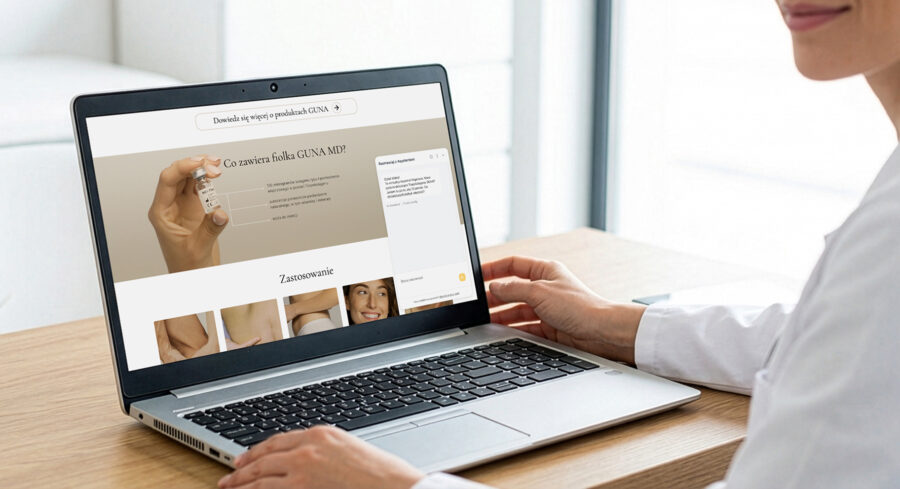 Tropokolagen.pl: an AI assistant running in production
An assistant built on the brand's knowledge base runs in production on the website: it answers product questions, guides visitors around the site and passes enquiries to the team.
Case study
Tropokolagen.pl: an AI assistant running in production
An assistant built on the brand's knowledge base runs in production on the website: it answers product questions, guides visitors around the site and passes enquiries to the team.
Case study
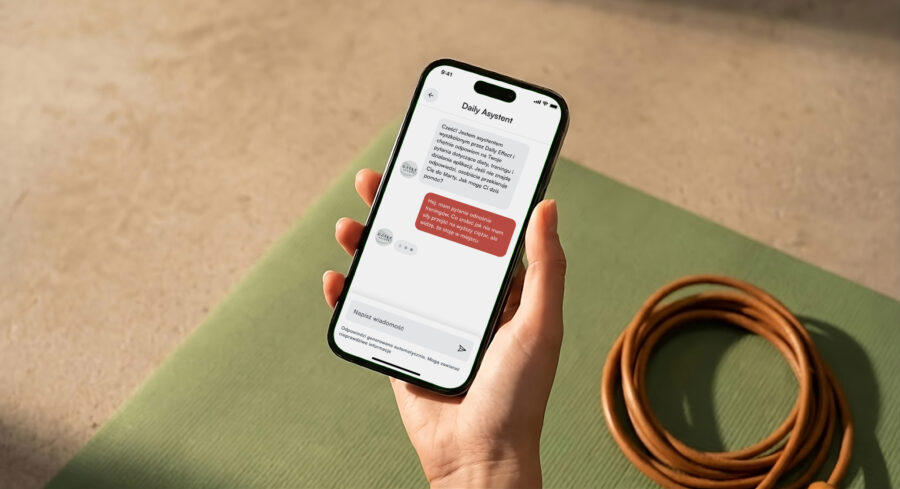 Daily Effect: an AI assistant in a mobile app
Over more than 6 months the assistant in the mobile app handled close to 400 sessions and resolved 72.7% of issues without a human agent.
Case study
Daily Effect: an AI assistant in a mobile app
Over more than 6 months the assistant in the mobile app handled close to 400 sessions and resolved 72.7% of issues without a human agent.
Case study
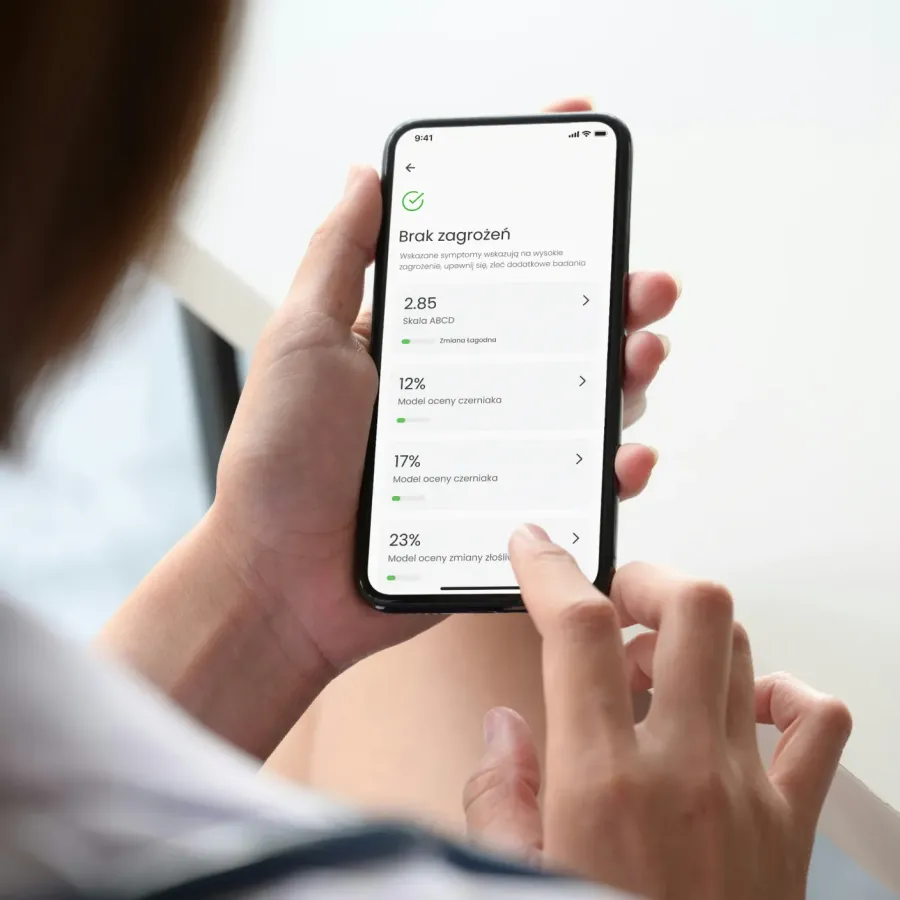 DermAI: AI photo analysis in a finished product
The mobile app and web panel, built in Flutter, combine AI analysis of skin lesion photos with ABCD scoring, reports and patient data.
Case study
DermAI: AI photo analysis in a finished product
The mobile app and web panel, built in Flutter, combine AI analysis of skin lesion photos with ABCD scoring, reports and patient data.
Case study
Why Squares
We assess the code and the product together: whether the interface makes sense, whether it is accessible and whether the architecture will cope with real traffic. The same team then leads delivery.
Questions
Frequently asked questions
Is a prototype built with Lovable or Cursor ready for production?
A prototype built in Lovable, v0, Bolt or Cursor is ready for production only after a review, because it is built fast but without an assessment of architecture, security or accessibility. The prototype audit covers UX, accessibility, code architecture, security and scalability. The result is a clear answer on which parts stay, which need fixing and which need rebuilding.
What is vibe coding and when does it stop being enough?
Vibe coding means building an app by describing it to AI tools such as Lovable, v0, Bolt or Cursor, which generate the code. It works well for a prototype or an internal tool. It stops being enough once customers, or more and more people inside the company, rely on the product: security, performance, accessibility and maintainable code then matter.
Can an AI prototype be fixed, or does it need rebuilding?
It depends on the area, which is why the work starts with an audit. Well-designed flows stay, while architecture and security often need rebuilding. For each area one of three decisions is made with the team: keep, fix or rebuild. We say so plainly before delivery work starts, because without that decision it cannot be priced reliably.
How much does it cost to take an AI prototype to production?
The prototype audit costs from PLN 4,500 net and is priced like a UX/UI audit, in packages that depend on scope. Production rollout starts at PLN 15,000 net. We quote it after the audit, because the scope depends on how much of the prototype can be kept.
What does an AI prototype audit cover?
The prototype audit covers five areas: UX, accessibility, code architecture, security and scalability. After the audit it is clear which parts of the prototype can be built on and which need fixing or rebuilding. That gives the Product Owner the basis to justify the budget to the board, and an estimate for taking the product to production.
Does an AI prototype meet accessibility (WCAG) and data protection requirements?
A quickly built prototype rarely meets accessibility requirements (WCAG, the European Accessibility Act) or protects sensitive data properly without a separate review. Accessibility and security are therefore fixed parts of the audit. This matters most in medtech and health, where a prototype launched without a review carries risk for accessibility and sensitive data.
Does it matter who built the prototype and with which tool?
No. The audit runs the same way for a prototype built by an in-house team or an external supplier, in Lovable, v0, Bolt, Cursor or another AI tool. To start, we need access to the code and a working version of the prototype, plus a conversation about who is going to use the product.
Can an NDA be signed before the prototype audit?
Yes. A light NDA is signed before the audit, before the team shares the code and access to the prototype. If the audit leads to a decision to take the product to production, a framework agreement sets the terms and each stage is ordered separately. The company decides on every step after the diagnosis.
What happens after the prototype reaches production?
After delivery the product keeps a design system and rules for working with AI tools, so features added this way do not pull the product apart again. The product can be covered by Maintenance & SLA, or its development can be handed to a Fractional product lead. This is the Optimisation stage in the process: Diagnosis, Design, Delivery, Optimisation.
Are there case studies for this service yet?
Taking AI prototypes to production is a new service and does not have its own case study yet. It builds on AI features we took to production: the assistant in the Daily Effect app handled nearly 400 sessions in over 6 months and resolved 72.7% of cases without a human agent. A second assistant runs on Tropokolagen.pl.