Case study
Daily Effect: an AI assistant in a mobile app
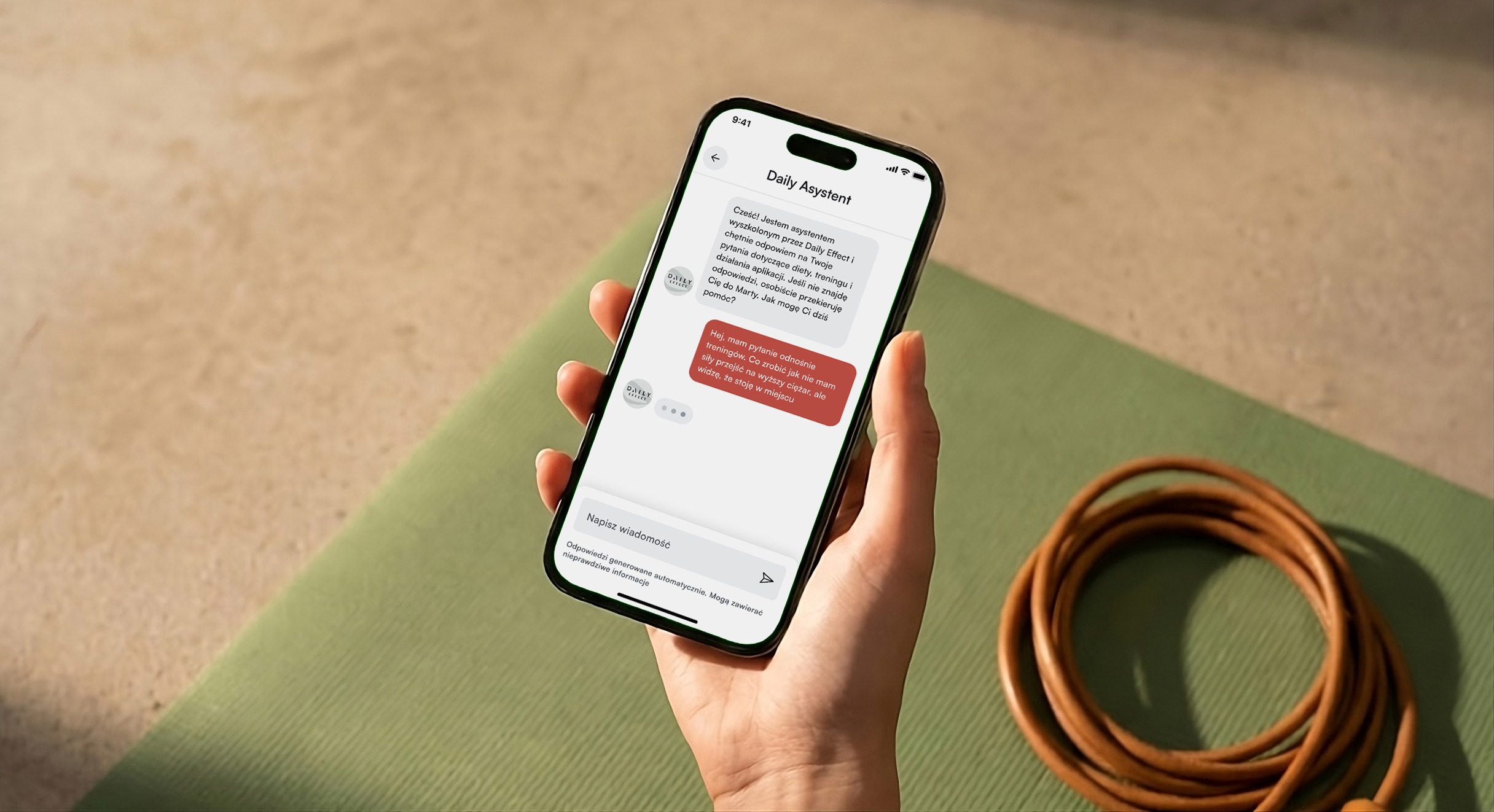
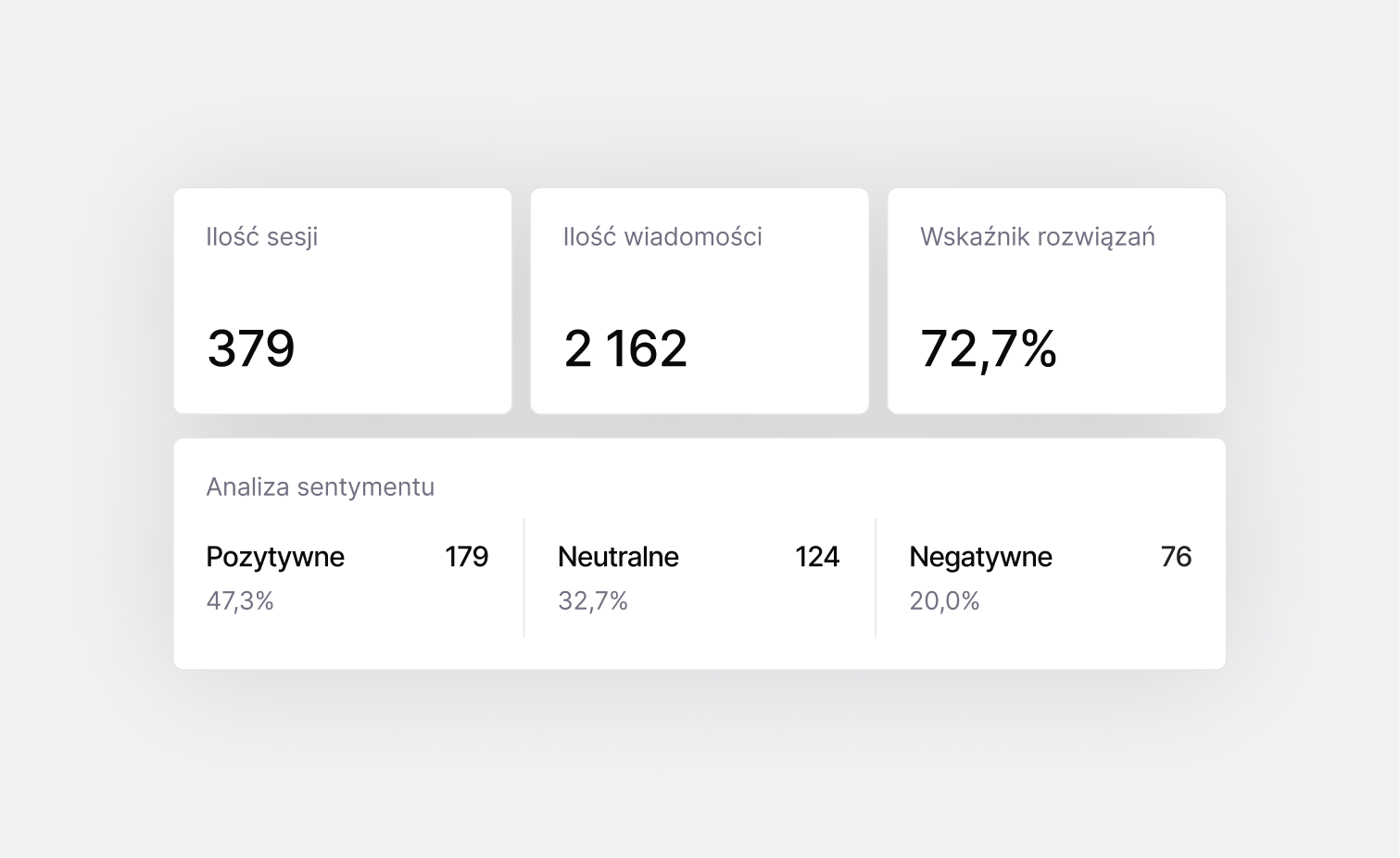
The Daily Effect team kept answering the same questions about training, diet and using the app. We deployed an AI assistant in the mobile app that answers from the company's own knowledge. Over more than 6 months it resolved 72.7% of cases without contacting support.
72.7%
of questions resolved without contacting support
2,500
messages, or close to it, with no support agent involved
80%+
of conversations neutral or positive in tone
We deployed Prose Captain, our AI assistant platform, in the Daily Effect app. The assistant took over users' recurring questions, and the team gained structured data on what users come back with most often.
Scope of work
- Industry
- Sport and fitness
- Product type
- AI assistant in a mobile app
- Market
- Fitness and diet (B2C)
- Year
- 2023 - w trakcie
Technologies
-
 Flutter
 - Product Design
- Sztuczna Inteligencja - AI
 Flutter
Key facts
- More than 6 months of the assistant running in the app
- Nearly 400 sessions and nearly 2,500 messages with no support agent involved
- Problem resolution rate: 72.7%
- Over 80% of conversations neutral or positive in tone
- A knowledge base built from the client's documents and materials (RAG)
- A panel for managing knowledge and analysing conversations
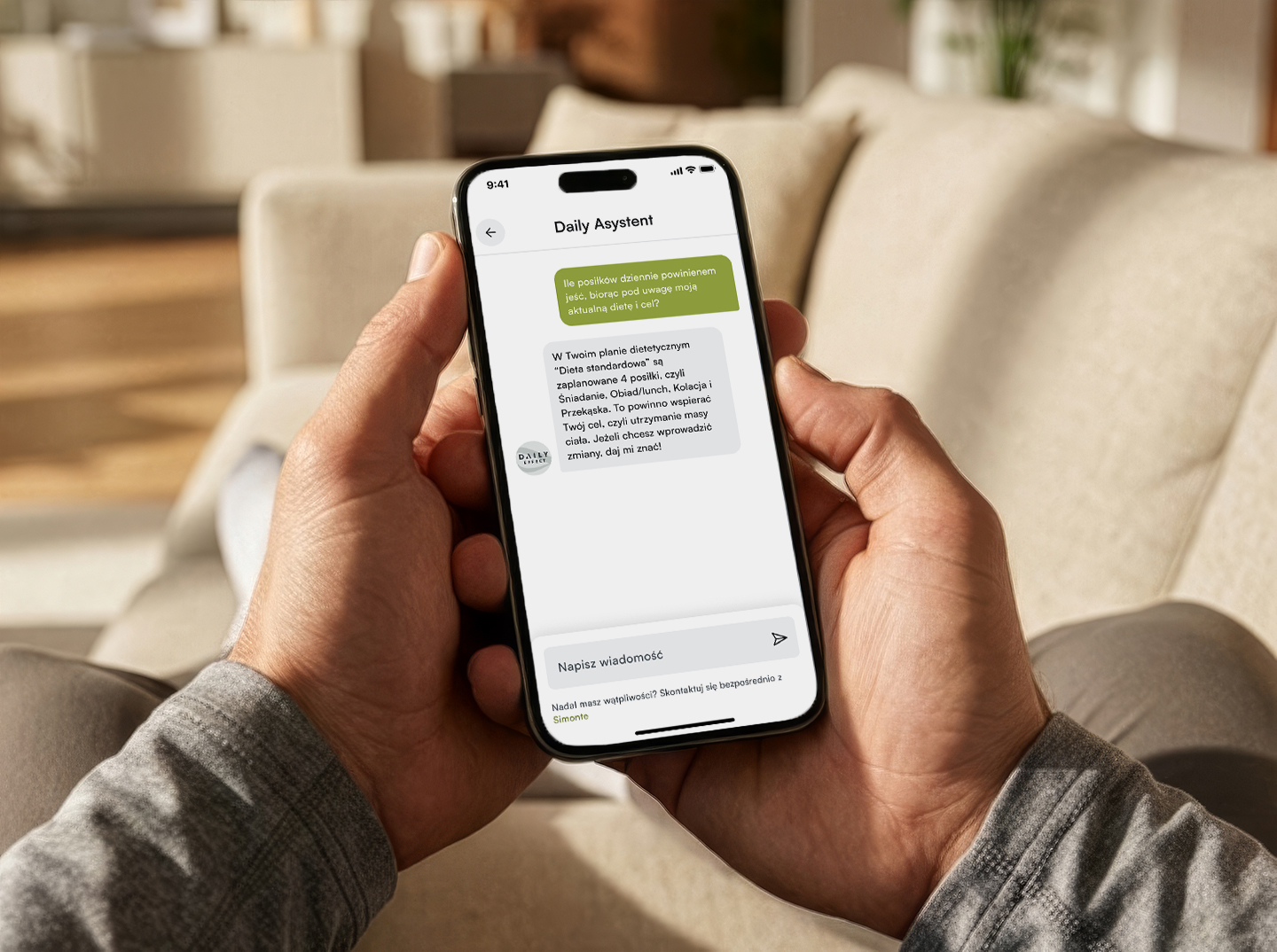
An assistant that knows the product: it answers from company knowledge, not generalities, and shows what users ask about.
Goals
01
Instant help
Users ask a question the way they would write to a support agent, and get an answer straight away.
02
Fewer repeat tickets
The assistant takes over the questions that keep coming back: app features, subscriptions, technical issues.
03
Conversation data
The team sees which topics dominate, which answers solve the problem and where the product has gaps.
Process
What we delivered
An assistant embedded in the app, together with the tooling to manage knowledge and measure conversations.
- Integration - the Prose Captain assistant available in the Daily Effect mobile app.
- Knowledge base - the client's materials adapted to a fitness product: diet, training, app features.
- Three layers of information - knowledge from documents, current content from the client's system and anonymised user context.
- Panel - knowledge management, question trends and answer effectiveness scoring.
- Analytics - measuring conversation quality and efficiency as the basis for further improvements.
Challenge: repetitive questions and no conversation data
In an app with an active community, most support time goes on questions that keep coming back: how a feature works, where to find something, how to change a subscription, what to do when something breaks.
For users, speed of response is what counts. For the company, it's consistent information and the ability to scale support without growing the team. The second problem was the lack of structured data on conversations.
The client wanted to know not just how many tickets there were, but which topics dominate and which answers actually solve the problem.
Solution: an AI assistant built on company knowledge
The assistant answers from sources provided by the company, in line with how the product actually works.
The foundation is a knowledge base built from the client's materials. The second layer is dynamic content from the Daily Effect system, which lets the assistant point users to current materials. The third is anonymised user context, which tailors answers to each user's situation without touching sensitive data.
A panel for the team
In the panel, the Daily Effect team manages knowledge, tracks question trends, scores answer effectiveness and improves the assistant based on real conversations.
Results: 72.7% of cases resolved without an agent
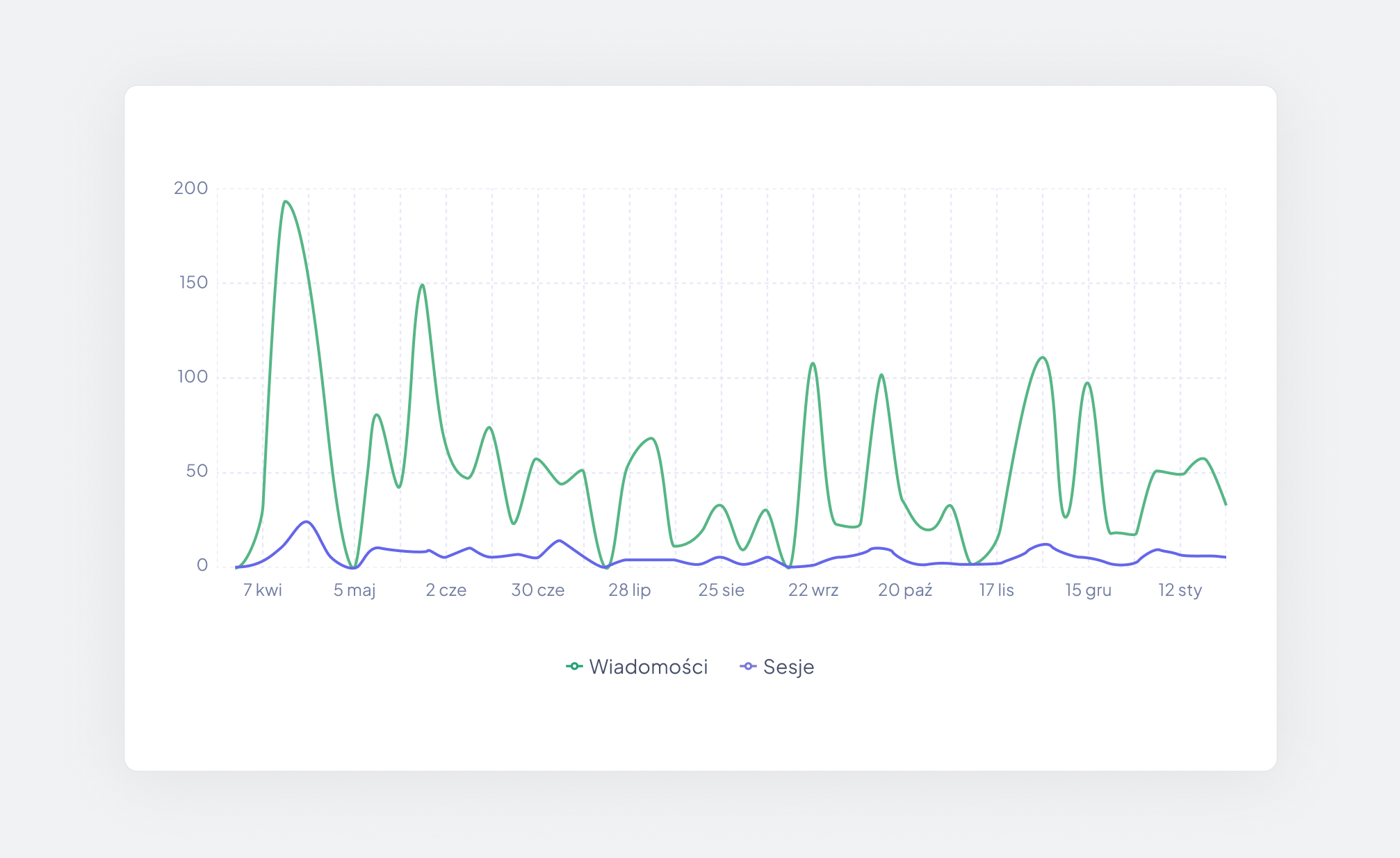
Over more than 6 months, the assistant handled nearly 400 sessions and generated nearly 2,500 messages with no support agent involved.
The problem resolution rate was 72.7%, meaning that in most cases users got a satisfactory answer without contacting support. Over 80% of interactions were neutral or positive in tone.
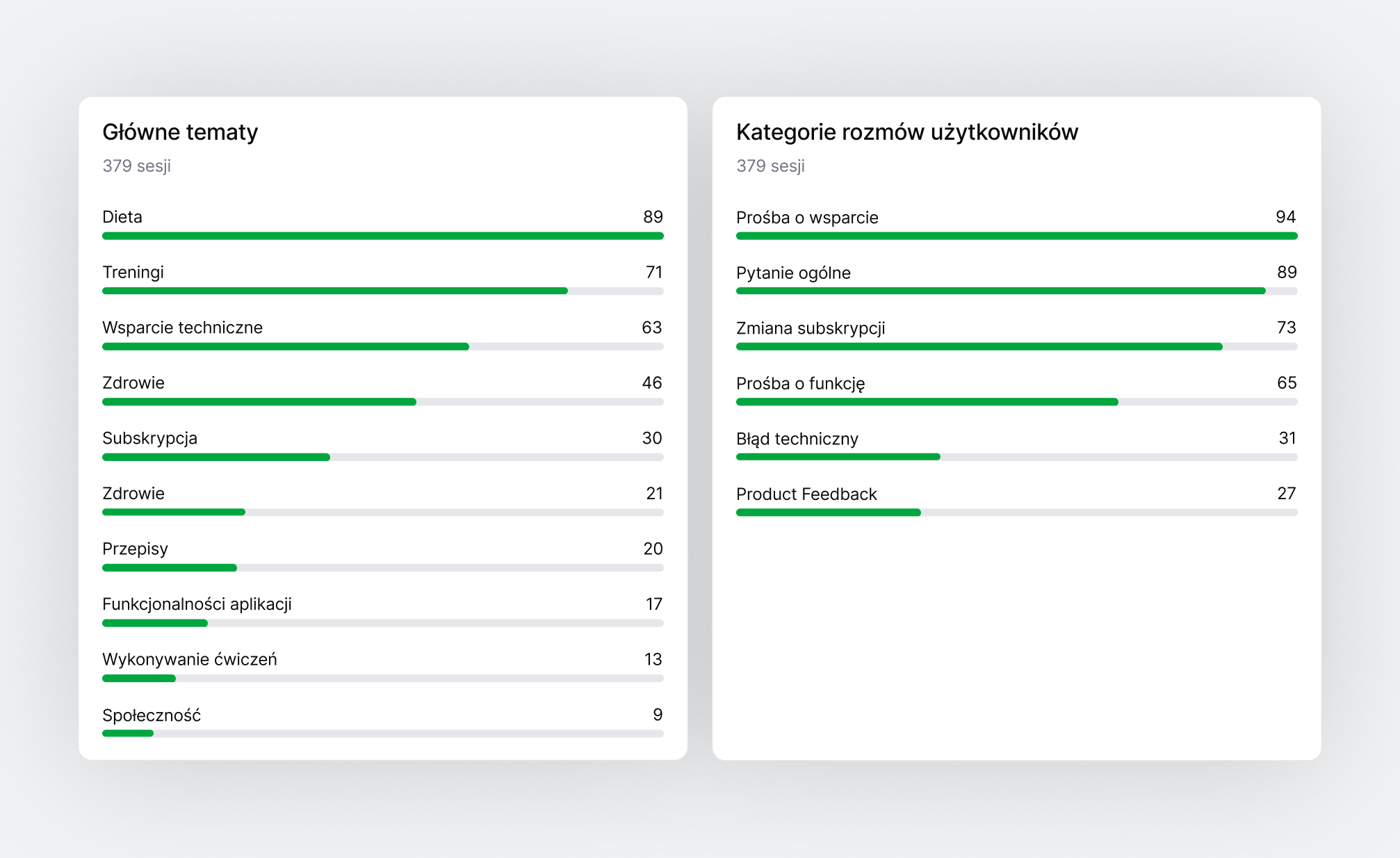
The most frequent topics were help with and use of the app, general questions, subscription changes and technical issues. These are the areas that put the most load on support in products like this, and structured data on them helps decide what to improve in the app and in communication.
Written by Radosław Kołacki Published Updated

„A great collaboration for over 2 years. The team is professional, punctual and genuinely committed to the development of the project. The app is polished and the communication is excellent. Highly recommended.”
 Daily Effect
Google review, translated from Polish · Full review
Daily Effect
Google review, translated from Polish · Full review
A team still answering the same questions? An assistant can take them over.
We start by reviewing the knowledge your company already has and the questions that come up most often.

Blog
Learn from our experts
Practical articles on researching, designing and delivering digital products.
 Mobile apps
Custom mobile app: stages from diagnosis to development
A custom mobile app project has four phases: diagnosis, design, development and optimisation. We describe the decision made in each and what remains afterwards.
12 Jan 2025 · Radosław Kołacki
Read more
Mobile apps
Custom mobile app: stages from diagnosis to development
A custom mobile app project has four phases: diagnosis, design, development and optimisation. We describe the decision made in each and what remains afterwards.
12 Jan 2025 · Radosław Kołacki
Read more
-
 Mobile apps
How much does it cost to build a mobile app?
17 Jul 2024 · Radosław Kołacki
Mobile apps
How much does it cost to build a mobile app?
17 Jul 2024 · Radosław Kołacki
-
 Business
Event Storming: what it is and how to run a workshop
15 Jul 2024 · Radosław Kołacki
Business
Event Storming: what it is and how to run a workshop
15 Jul 2024 · Radosław Kołacki
-
Business and UX metrics
Engagement rate in a SaaS product: how to calculate it, with 2 examples
13 Dec 2023 · Radosław Kołacki