Case study
Keramzytbud: an online house configurator and landing page
Keramzytbud builds houses from expanded clay blocks and wanted clients to adapt the plan of their house themselves. We designed a modular online house configurator, a lead generation landing page and a design system, and tested the scenarios on hi-fi prototypes in Figma.
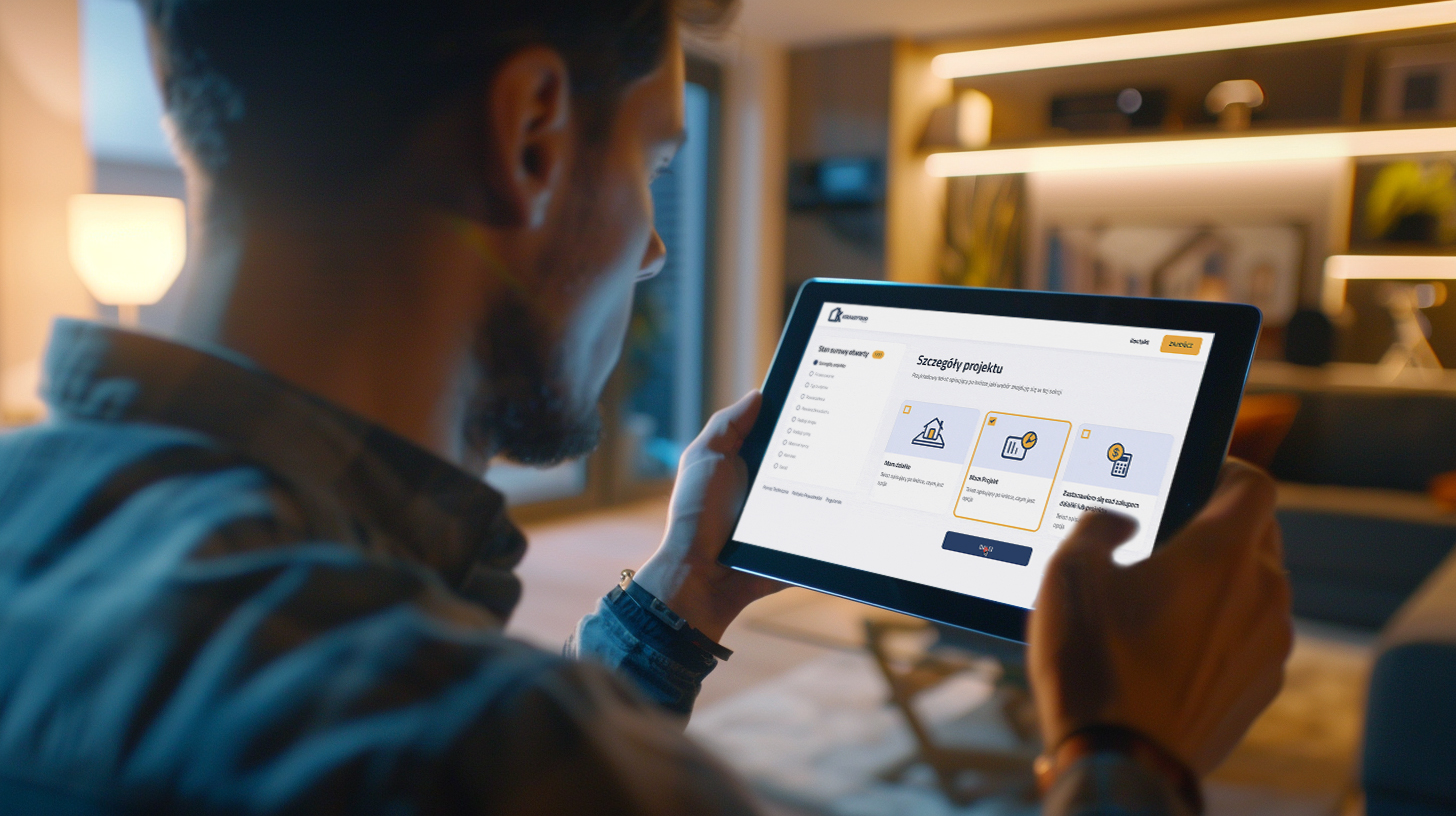
Keramzytbud builds houses from lightweight expanded clay blocks. We designed a configurator where clients adapt a house plan from elements such as the layout, walls, windows, doors and roof, plus a landing page that encourages people to try the tool.
Scope of work
- Industry
- Startups
- Product type
- Product configurator and landing page
- Market
- Construction / expanded clay houses
Technologies
- Kalkulatory i konfiguratory produktów
- Product Design
- Product discovery
Key facts
- Wireframes from paper sketches to digital mock-ups in Figma
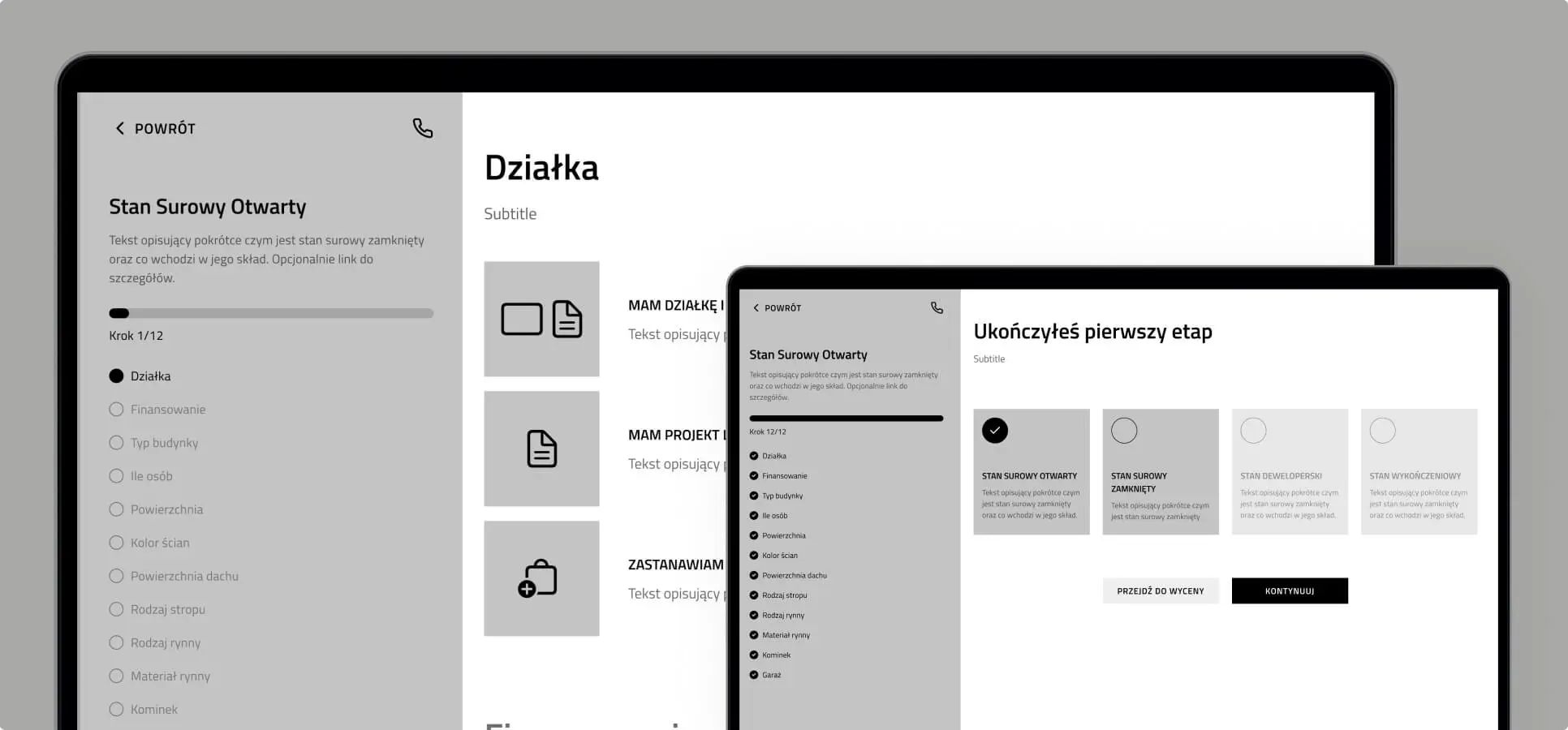
- Modular configurator: layout, walls, windows, doors and roof
- Interactive hi-fi prototypes for testing scenarios
- Landing page with clear calls to action
- Design system: colour palette, typography, iconography
Clients design their own house from modules, and the builder gets a ready-made lead.
Goals
01
A house tailored online
Let clients easily adapt a house plan built from Keramzytbud materials.
02
Intuitive interaction
Design a configurator people can use without instructions.
03
Leads for the business
Attract prospective clients with a page that encourages them to try the tool.
Process
What we delivered
A house design tool and a page that brings clients to it.
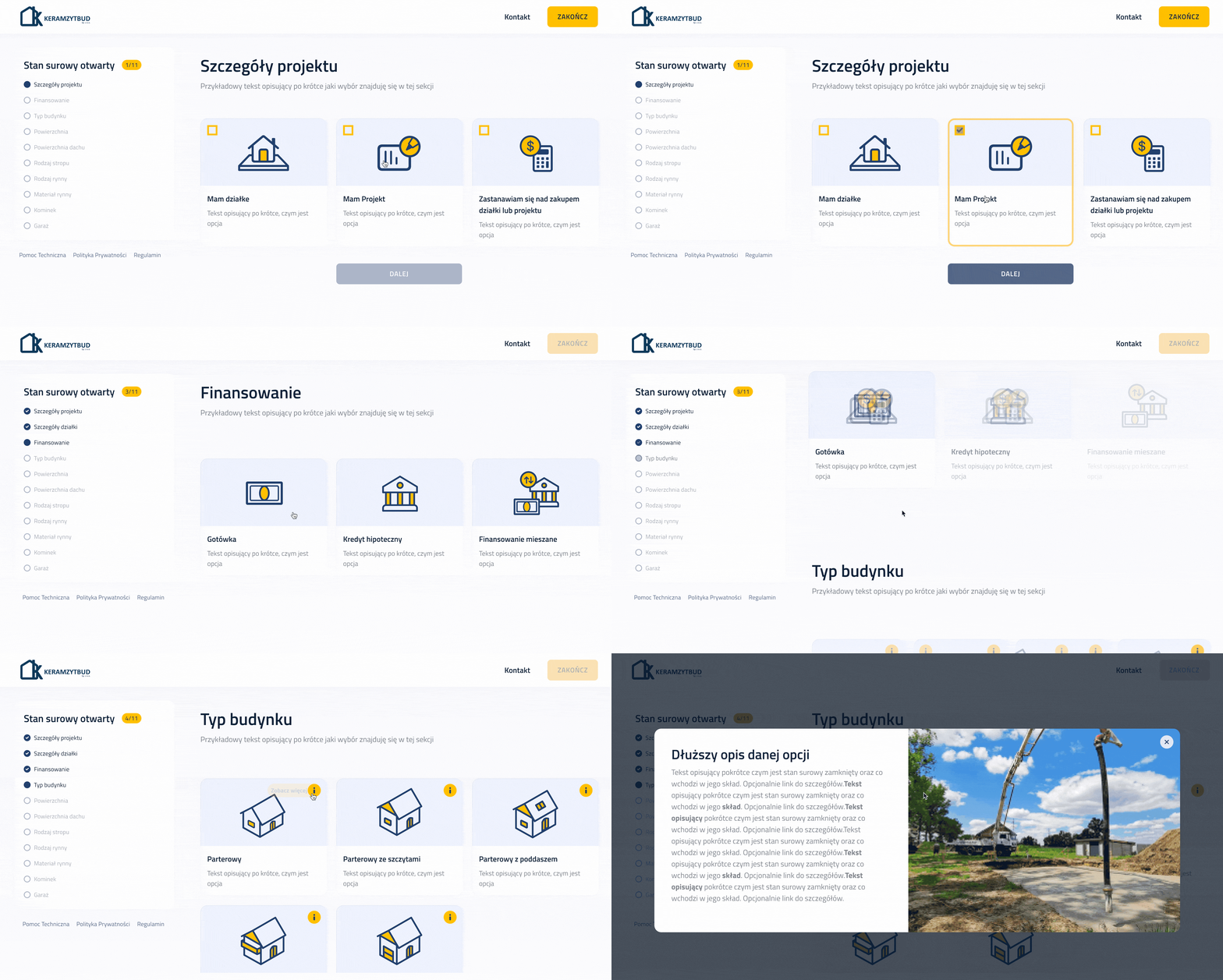
- Wireframes - paper sketches and digital mock-ups in Figma that set the configurator's logic.
- House configurator - a modular system for choosing the layout, walls, windows, doors and roof.
- Hi-fi prototypes - an interactive version in Figma that we used to test usage scenarios.
- Landing page - a landing page with calls to action and a message about the benefits of building with Keramzytbud materials.
- Design system - colour palette, typography, iconography and design elements ready to reuse in future projects.
Challenge: house design broken down into simple choices
Keramzytbud builds houses from lightweight expanded clay blocks. Clients needed to be able to adapt the plan of their own house using the company's materials.
The configurator had to be easy to use for someone who doesn't design houses for a living, and technically feasible on the company's side. On top of that, it needed a page that would convince prospective clients to try the tool.
Designing a house is a complex decision. The configurator had to break it down into simple choices.
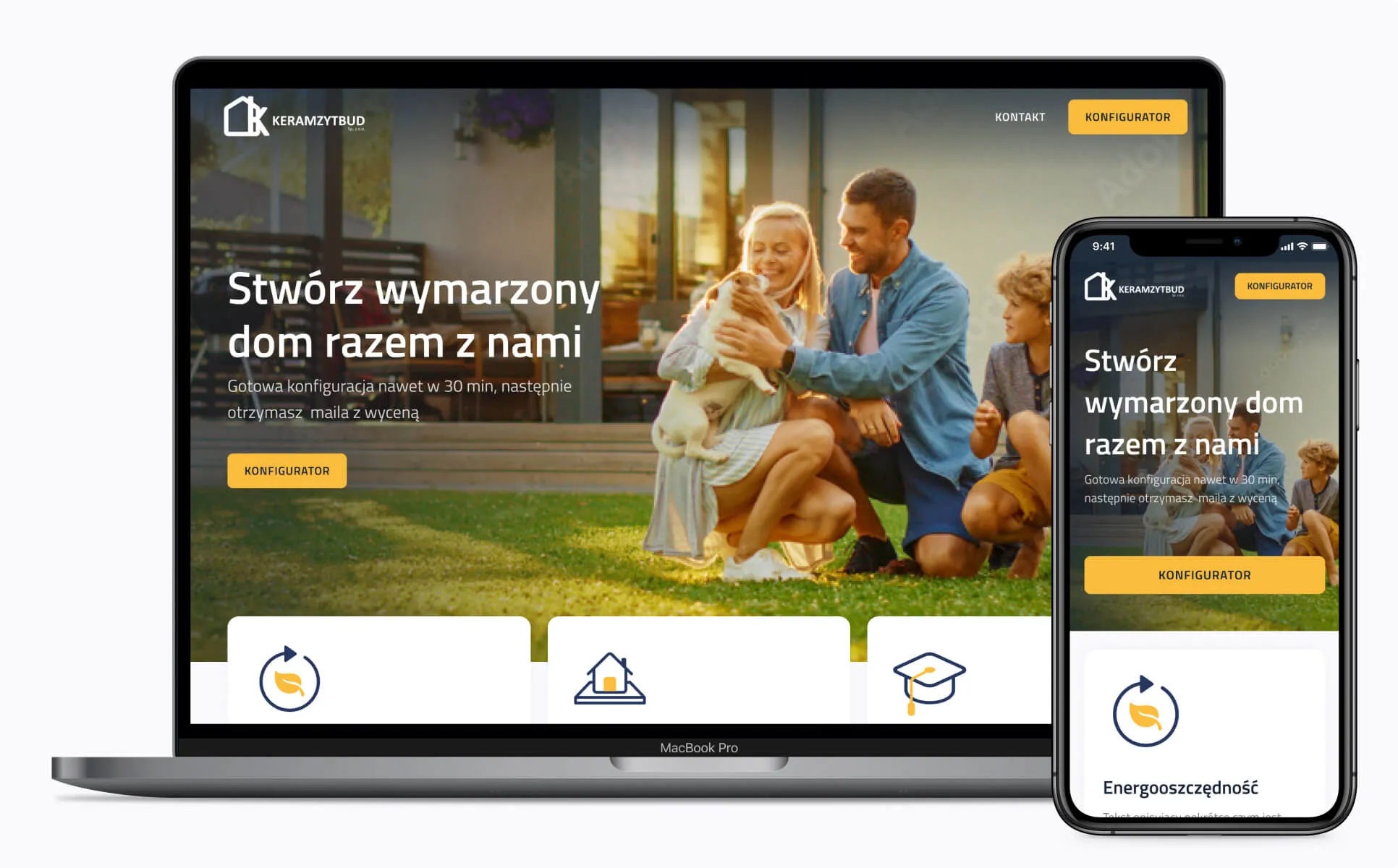
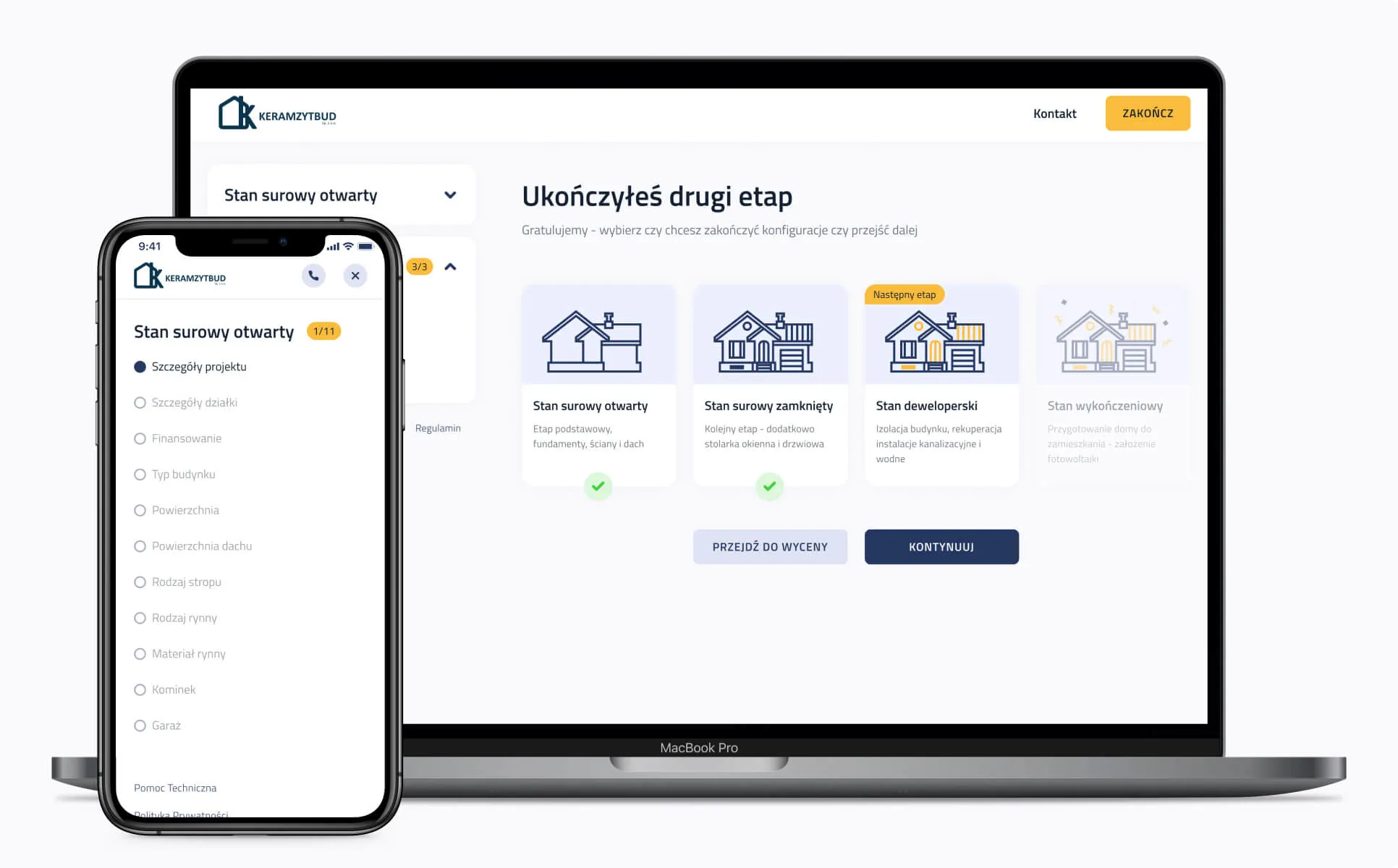
Solution: a modular configurator and a landing page
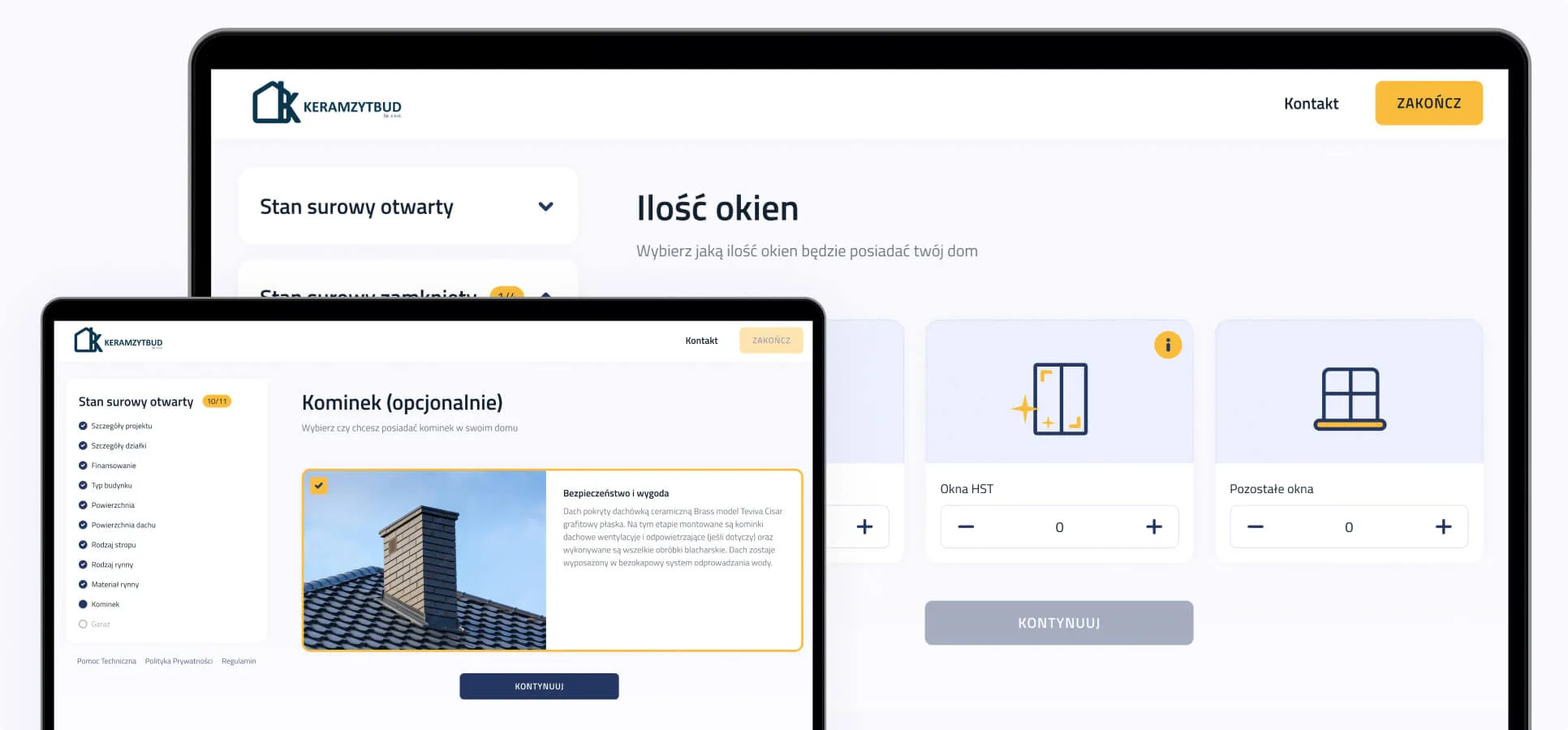
The configurator is built on modules: users choose the layout, walls, windows, doors and roof of their house.
We started with paper sketches, then moved to wireframes in Figma, which let us iterate on ideas quickly. Interactive hi-fi prototypes were used to test scenarios and refine the interactions. At every stage, we checked with the Keramzytbud team that the solutions were technically feasible.
A lead-generating landing page
The landing page is easy to navigate, has clear calls to action and highlights the benefits of building a house with Keramzytbud materials.
Design system
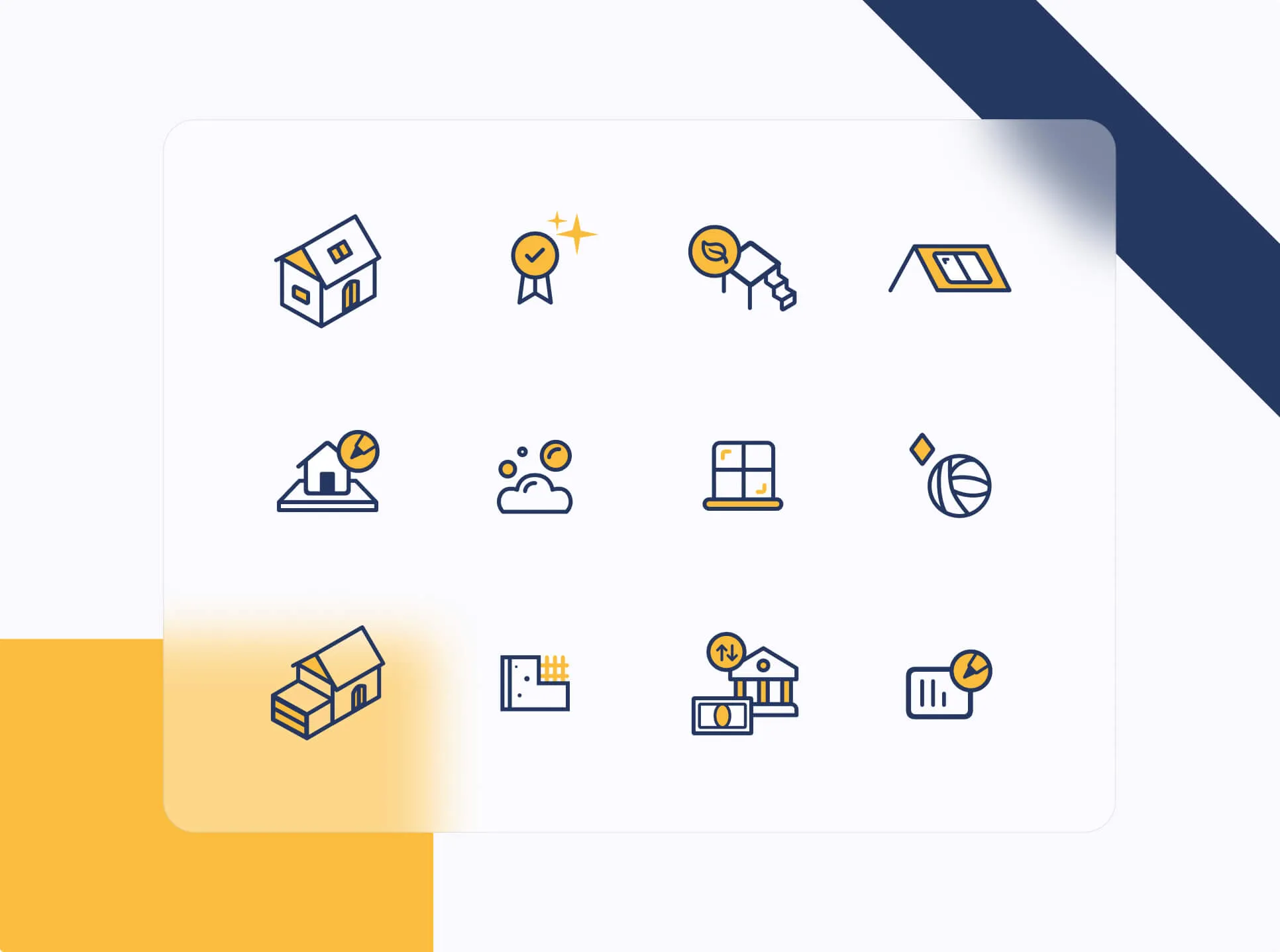
The colour palette, typography and iconography keep the configurator and the brand's other digital channels consistent. The elements are easy to reuse in future projects.
Why a company needs a product configurator
A dedicated calculator or configurator on the website gives a company with a complex product several concrete benefits.
Fit
The tool meets the needs of the company and its clients, and a tailored experience sets it apart from the competition.
Efficiency
Automatic calculations save time and reduce the risk of errors.
Transparency
A clear cost breakdown builds trust and credibility.
Convenience
Clients check what they need at any time, from anywhere.
Marketing
A free, useful tool attracts new clients and raises brand awareness.
Written by Radosław Kołacki Published Updated
A product that can be configured?
We start every configurator with sketches and a prototype we test before any code is written.

Blog
Learn from our experts
Practical articles on researching, designing and delivering digital products.
 Mobile apps
Custom mobile app: stages from diagnosis to development
A custom mobile app project has four phases: diagnosis, design, development and optimisation. We describe the decision made in each and what remains afterwards.
12 Jan 2025 · Radosław Kołacki
Read more
Mobile apps
Custom mobile app: stages from diagnosis to development
A custom mobile app project has four phases: diagnosis, design, development and optimisation. We describe the decision made in each and what remains afterwards.
12 Jan 2025 · Radosław Kołacki
Read more
-
 Mobile apps
How much does it cost to build a mobile app?
17 Jul 2024 · Radosław Kołacki
Mobile apps
How much does it cost to build a mobile app?
17 Jul 2024 · Radosław Kołacki
-
 Business
Event Storming: what it is and how to run a workshop
15 Jul 2024 · Radosław Kołacki
Business
Event Storming: what it is and how to run a workshop
15 Jul 2024 · Radosław Kołacki
-
Business and UX metrics
Engagement rate in a SaaS product: how to calculate it, with 2 examples
13 Dec 2023 · Radosław Kołacki