Industries
The first version of a product should answer one question: does anyone need it
We work with young product companies that are building their first product and have a budget for it. We help decide what goes into the first version, and then we design and build it.
Where a first product loses its budget
The most expensive things in a first product are features that nobody will use. The budget escapes in four places.
01
Scope too wide
A first version with a full set of features takes a long time and tests nothing. We limit the scope to what solves the user's main problem.
02
No conversations with users
We test assumptions about users in interviews and prototype tests before any code is written.
03
Technology chosen too early
We choose the technology to fit the scope of the first version and the team that will maintain it.
04
No plan after launch
After release we collect data on how people use the product and use it to plan the next stages.
From workshop to a working first version
We guide young product companies through the whole cycle: from the decision on what to build to a working product. The scope covers:
- A Discovery workshop and validation of the idea
- Projektowanie i prototypowanie produktu
- Development of the first version (MVP) of a web or mobile app
- Projektowanie UX/UI
- Tests with users and product optimisation
- Product development after launch
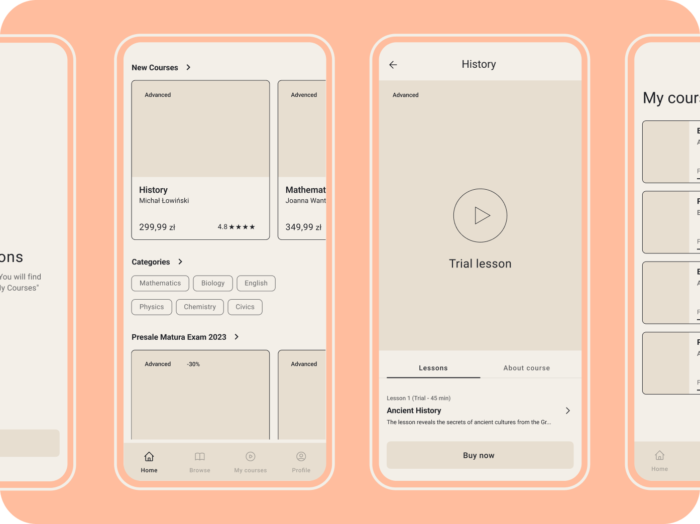
A prototype tests the idea before any code is written
A clickable prototype lets you test the product with users before the budget goes on development.
Within 2-4 weeks we produce a clickable mock-up of the product, ready for tests with users. It costs from PLN 8,000 net, a fraction of full development, and quickly shows which assumptions do not hold. The prototype is then used to plan the scope of the first version.
Development in two-week sprints
We agree the key features of the first version with the team, build it and plan the next steps based on user feedback.
In each sprint, priority goes to the features that give the product the most.
Case studies
Wybrane realizacje
A marketplace for children's goods, an app for school leavers and an AI app for children with dyslexia and ADHD.
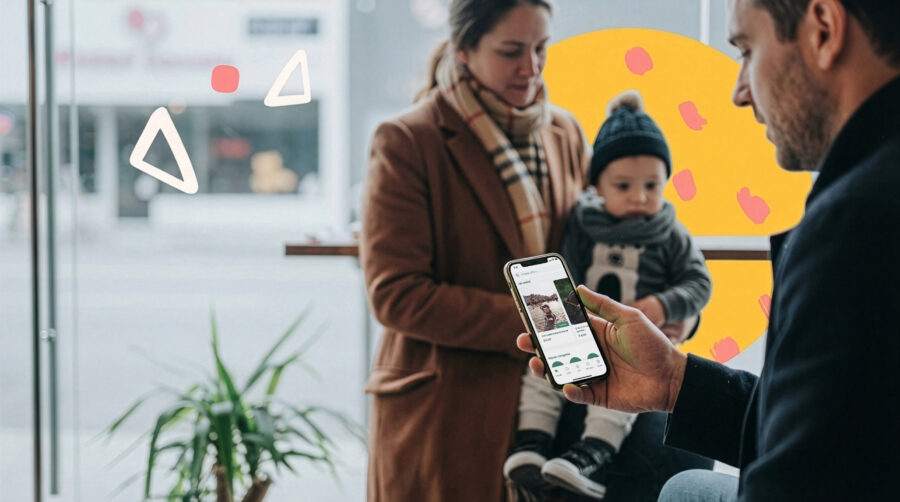 A marketplace mobile app for children’s goods
Parents buy things children quickly grow out of, and then want to sell or swap them. We designed a marketplace...
Case study
A marketplace mobile app for children’s goods
Parents buy things children quickly grow out of, and then want to sell or swap them. We designed a marketplace...
Case study
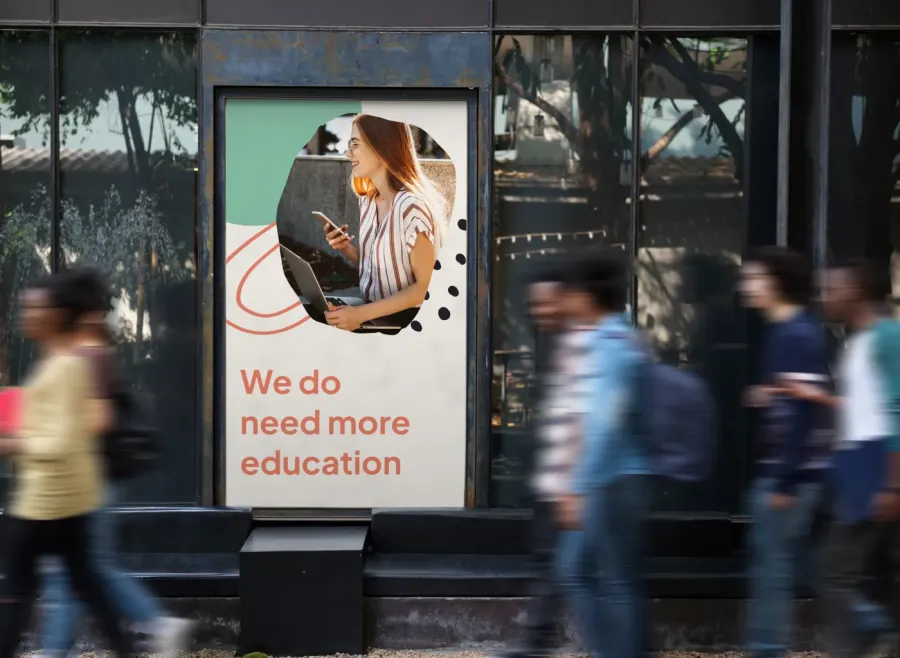 Exam preparation mobile app: study plan, courses and tests
Preparing for the Polish school-leaving exam means many subjects, levels and scattered materials. We designed and built a Flutter mobile...
Case study
Exam preparation mobile app: study plan, courses and tests
Preparing for the Polish school-leaving exam means many subjects, levels and scattered materials. We designed and built a Flutter mobile...
Case study
 Imagine Stories: an AI app for dyslexia and ADHD therapy
Speech therapists, therapists and parents lacked stories tailored to a particular child. We designed and built Imagine Stories: a web...
Case study
Imagine Stories: an AI app for dyslexia and ADHD therapy
Speech therapists, therapists and parents lacked stories tailored to a particular child. We designed and built Imagine Stories: a web...
Case study
Contact
Let's talk about the first version of your product
A short description of the idea, the users and the budget is enough. In the first conversation we decide whether to start with a workshop or with a prototype.
Questions
Frequently asked questions
What is an MVP and what features should it include?
An MVP is a first version of a product limited to the features that solve the user's main problem. Everything else waits for later stages. We set the scope with the team in a workshop: we list the assumptions, choose the ones that must be tested first and cut the rest. The first version is then built faster and answers the question of whether the product is needed.
How long does it take to build a first version of a product (MVP)?
A first version of a product is typically built in two to three months. The process starts with a Discovery workshop, then a prototype is built, and development comes last. The clickable prototype alone takes two to four weeks. We set the exact schedule once we know the scope and the integrations the product requires.
How much does a prototype and a first version of a product cost?
Prototyp aplikacji kosztuje od 8 000 zł netto, a wdrożenie pierwszej wersji zaczyna się od 10 000 zł netto. Prace rozliczane według czasu kosztują 250 zł netto za godzinę. Kolejność ma znaczenie: prototyp sprawdzony z użytkownikami pozwala wyciąć z wdrożenia funkcje, które okazały się niepotrzebne.
Can a project start with a smaller budget and grow in stages?
Yes, we divide the project into stages, each with its own scope and price. The first is a workshop or a prototype, the next is a first version with the basic features. We plan the following stages based on how people use the product. Such a split limits the risk of spending the whole budget on a direction that does not work.
What happens when the project scope changes during the work?
A change of scope is a normal part of working on a first product. We work in two-week sprints, so priorities can be reordered at the start of each one. A new feature goes into the plan in place of another or extends the schedule, and its cost is known before work begins.
What do cooperation and communication look like during the project?
The company's team has a constant view of progress and a status meeting every week or every two weeks. The work is divided into two-week sprints, and after each one the team reviews what has been built. Decisions on scope are made by the person responsible for the product on the company's side, based on sprint results and user feedback.
What support covers the period after the first version is released?
After release the product is covered by three months of support: we monitor how the app works and make fixes and optimisations. During that time we collect data on how people use the product, along with user feedback. A plan for the next stages is built on that. Further maintenance is governed by an SLA or an hour package.
How does cooperation on a first product begin?
We start with a conversation about the idea, the users and the budget. If the scope is unclear, the first step is a Discovery workshop, which takes one or two weeks. When the scope is known, we start with a prototype. In both cases, after the first stage the company has material it can continue working with, including with another supplier.