
Design sprint
From problem to tested prototype in five days
An argument over product direction can run for months; a sprint settles it in a week. We unpack the problem with the client's team, choose a direction, build a clickable prototype and test it with users.
Written by Radosław Kołacki Updated
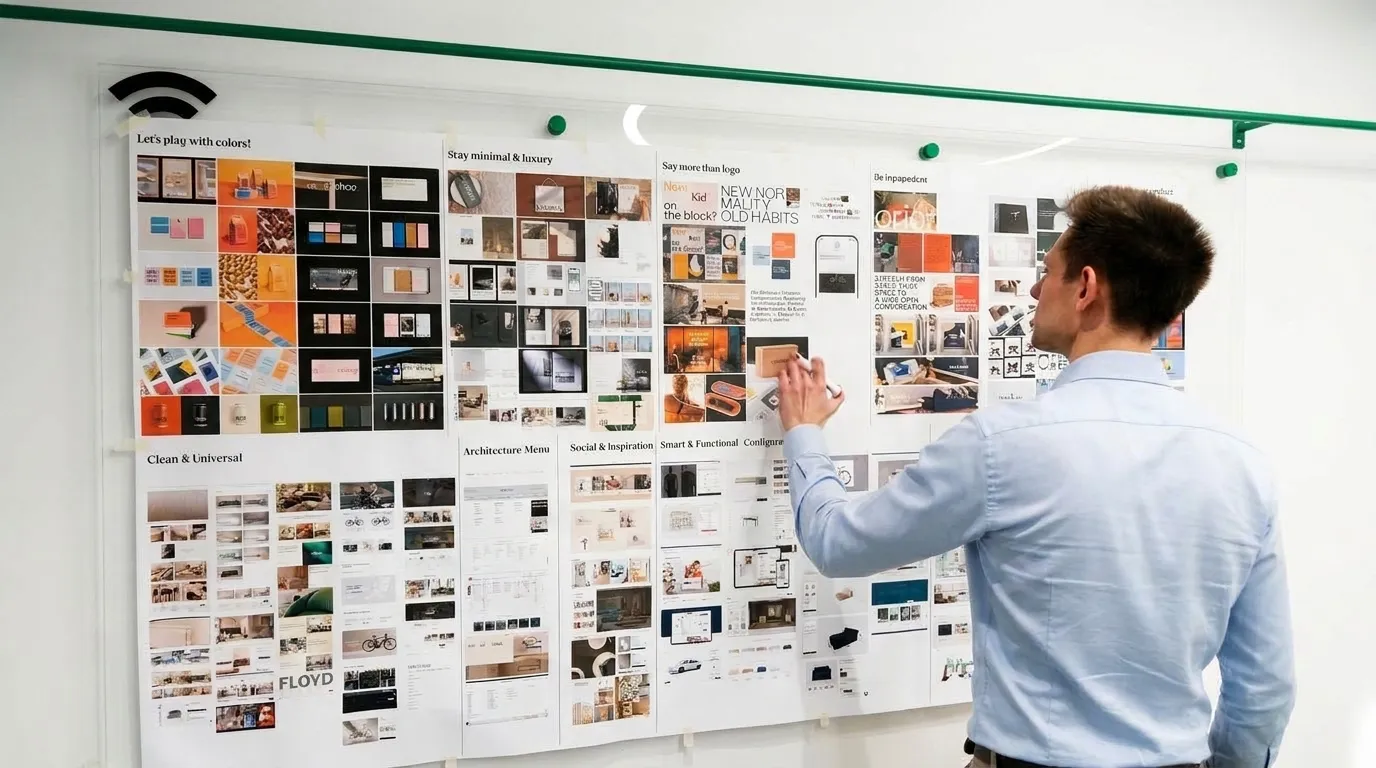
Trusted by



















When is a design sprint worth it?
The team faces an important product decision and has little time.
It may be a new product, a large feature or a direction the team cannot agree on, and the answer is needed before the build starts.
Who is a design sprint for?
- A product team faces a large investment in a new feature or product
- A head of product at a small or mid-sized B2B or SaaS company has to justify that investment to the board
- A decision has stalled between departments and a shared direction is needed
- A medical or health product, where wrong assumptions cost the most
How it works
How does a design sprint work step by step?
01
Understand
We map the problem and agree the sprint goal and the questions it has to answer.
02
Sketch
Each participant sketches their own solution before we start comparing them.
03
Decide
We choose a direction and write up the prototype storyboard.
04
Prototype
We build a clickable prototype realistic enough to test.
05
Test
We test the prototype with users and write up the findings.
After a week there is a tested prototype, recordings and findings from the user conversations, and a clear recommendation: build, revise or drop. On top of that comes a first-version scope ready for a build estimate.
How much does a design sprint cost?
from PLN 8,000 net
A sprint costs from PLN 8,000 net. The sprint has a fixed scope and a fixed price: workshops, prototype and testing in one package. We give the price after a short call about the topic and the team involved, before any commitment.
A call about the sprint topic and an initial estimate carry no obligation. We answer enquiries within a few hours.

„We have been working with Squares and Radek Kołacki for over a year. At the beginning of 2019 we needed to launch a website that would build brand awareness and share our knowledge and experience.”
 AirComPL PneumatykaAutomatyka
Google review, translated from Polish · Full review
AirComPL PneumatykaAutomatyka
Google review, translated from Polish · Full review
Work
How it works in practice
 pompy.app: the workshops that opened the project
The project began with on-site Event Storming workshops and then moved on to interactive prototypes. These are the same steps as in a sprint, spread over a longer project.
Case study
pompy.app: the workshops that opened the project
The project began with on-site Event Storming workshops and then moved on to interactive prototypes. These are the same steps as in a sprint, spread over a longer project.
Case study
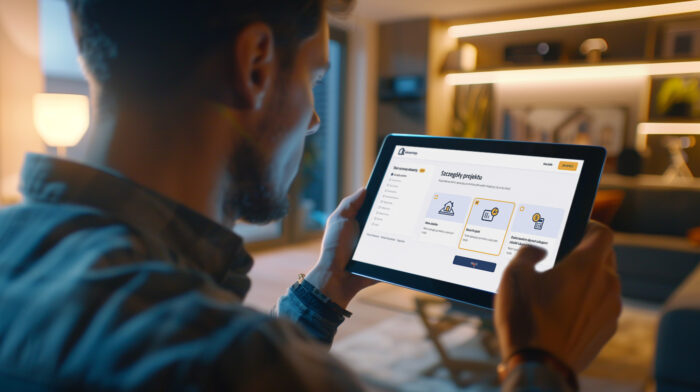 Keramzytbud: a house configurator checked on a prototype
From paper sketches, through wireframes, to an interactive Figma prototype for testing scenarios: the order known from a sprint, here in a full project.
Case study
Keramzytbud: a house configurator checked on a prototype
From paper sketches, through wireframes, to an interactive Figma prototype for testing scenarios: the order known from a sprint, here in a full project.
Case study
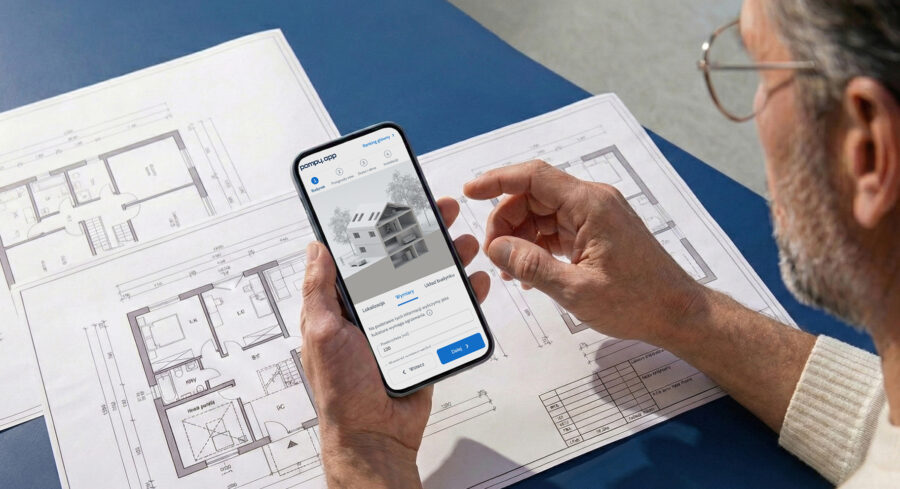 Heat demand calculator: a clickable prototype before the build
The prototype let us check the logic of the steps, the order of the questions and the presentation of the result before the final tool was built. The last stage of a sprint works the same way.
Case study
Heat demand calculator: a clickable prototype before the build
The prototype let us check the logic of the steps, the order of the questions and the presentation of the result before the final tool was built. The last stage of a sprint works the same way.
Case study
Why Squares
A sprint combines what is usually done separately: a workshop, a prototype and research. It is run by a team that designs and tests products every day, so the week ends with a decision, not another presentation. We checked the heat demand calculator and the Keramzytbud house configurator on interactive prototypes, scenario by scenario.
Questions
Frequently asked questions
What is a design sprint?
A design sprint is a five-day process in which a team goes from a problem to a prototype tested with users. The steps are understanding the problem, sketching solutions, deciding on a direction, a clickable prototype and testing. It combines what is usually done separately: a workshop, a prototype and research.
How much does a design sprint cost?
A design sprint has a fixed price for the whole scope: workshops, prototype and testing in one package. We give the amount after a short call about the topic and the team involved, before any commitment. The price does not change during the sprint, and the initial quote is not an obligation to order.
How long does a design sprint take?
A classic design sprint takes five working days. They do not have to be five days in a row: we spread it over two weeks or shorten the workshop part when the problem is already well described. On top of that come a few days before kick-off for recruiting test participants.
What remains after a design sprint?
After a week there is a tested prototype, recordings and findings from the user conversations, and a recommendation: build, revise or drop. On top of that comes a first-version scope ready for a build estimate. The head of product therefore has material to justify the investment to the board before development starts.
When does a design sprint make sense?
A design sprint makes sense before a major investment in a new product or feature, when the decision is stuck between departments and time is short. A dispute over direction can go on for months, and a sprint closes it in a week. When the problem has not been named yet or the scope is broad, a Product workshop is the better start.
How is a design sprint different from a product workshop and from Prototype & MVP?
A Product workshop ends with a written scope, Prototype & MVP with a refined prototype, and a design sprint combines both steps with testing in five days. A sprint answers one question about direction. Prototype & MVP, priced from PLN 8,000 net, covers more screens and takes a few weeks.
How many people from the client's side take part in a design sprint?
A few people from the client's side take part in the sprint: someone who makes the decision, plus people who know the product, the technology and the customers. Others join for the wrap-ups. Every participant sketches their own solution before the comparison begins, so each of those roles has a voice in the sprint.
Who invites users to test the prototype?
Test participants are recruited by Squares, or the company invites its own customers. We agree this before kick-off, because recruitment takes a few days. Testing is the last step of the sprint: we test the prototype with users and write up the findings, and the recordings go into the final materials. Recruitment is built into the sprint schedule.
Can a design sprint be run remotely and under an NDA?
Yes, we run design sprints remotely or on site, with teams in Poland and abroad. Product plans are the subject of the sprint, so a light NDA is signed before the first workshop day. When further work follows the sprint, a framework agreement allows it to be ordered on fixed terms.
What happens after a design sprint?
If the direction holds up, the next step is UX/UI design or an MVP, based on the first-version scope written up in the sprint. If testing reveals weak points, we revise the prototype or recommend dropping the idea before the budget goes into the build. The same Squares team can lead the further stages.