
Case study
Pompy.app: a heat pump comparison site with over 600 models
Information on heat pumps was scattered across manufacturer sites and catalogues, and the client came with an idea and a spreadsheet. We designed and built Pompy.app: a heat pump comparison site with a database of over 600 models, filters and rankings, which turns interest into quote requests for installers.

600+
heat pump models in the database
150+
technical parameters for each model
3-20 kW
power range of the compared units
We designed and built Pompy.app, a service that brings scattered heat pump data into one place, lets users filter and compare it, and turns their interest into quote requests for installers.
Scope of work
- Industry
- E-commerce and retail
- Product type
- Comparison tool and specialist service
- Market
- HVAC / heat pumps
- Year
- 2024-2026
Technologies
- Headless CMS
- Product Design
- Product discovery
- Web
Key facts
- More than 600 heat pump models in one database
- More than 150 technical parameters for each model
- Product workshops with Event Storming at the start of the project
- Headless CMS and a metrics dashboard for the client's team
- Quote requests routed automatically to an adviser or installer
We turned a data spreadsheet into a product: a database, a comparison tool and a source of quote requests.

Goals
01
One place for heat pump data
Bring information scattered across manufacturer websites and trade catalogues into a single, standardised database.
02
Choices based on parameters
Give users tools to compare models from different brands against the same criteria.
03
Requests for installers
Turn user engagement into concrete quote requests with a full picture of their needs.
Process
What we delivered
A complete platform: a database, selection tools and a back office for handling requests.
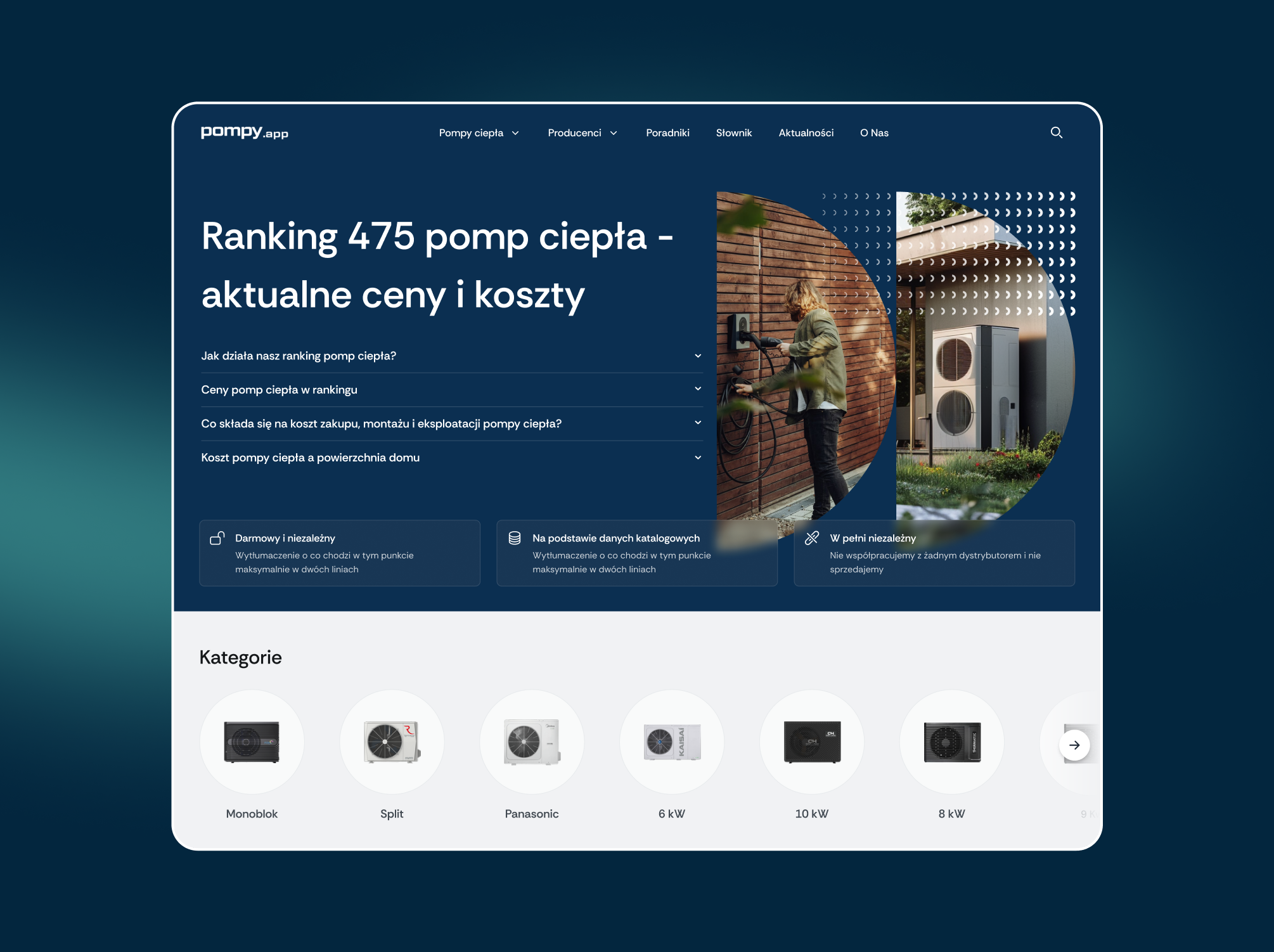
- Product database - more than 600 air-source heat pump models from 3 to 20 kW, each described by more than 150 technical parameters.
- Filters and rankings - narrowing the list by power, type, brand, refrigerant and price, plus ready-made shortlists for less experienced users.
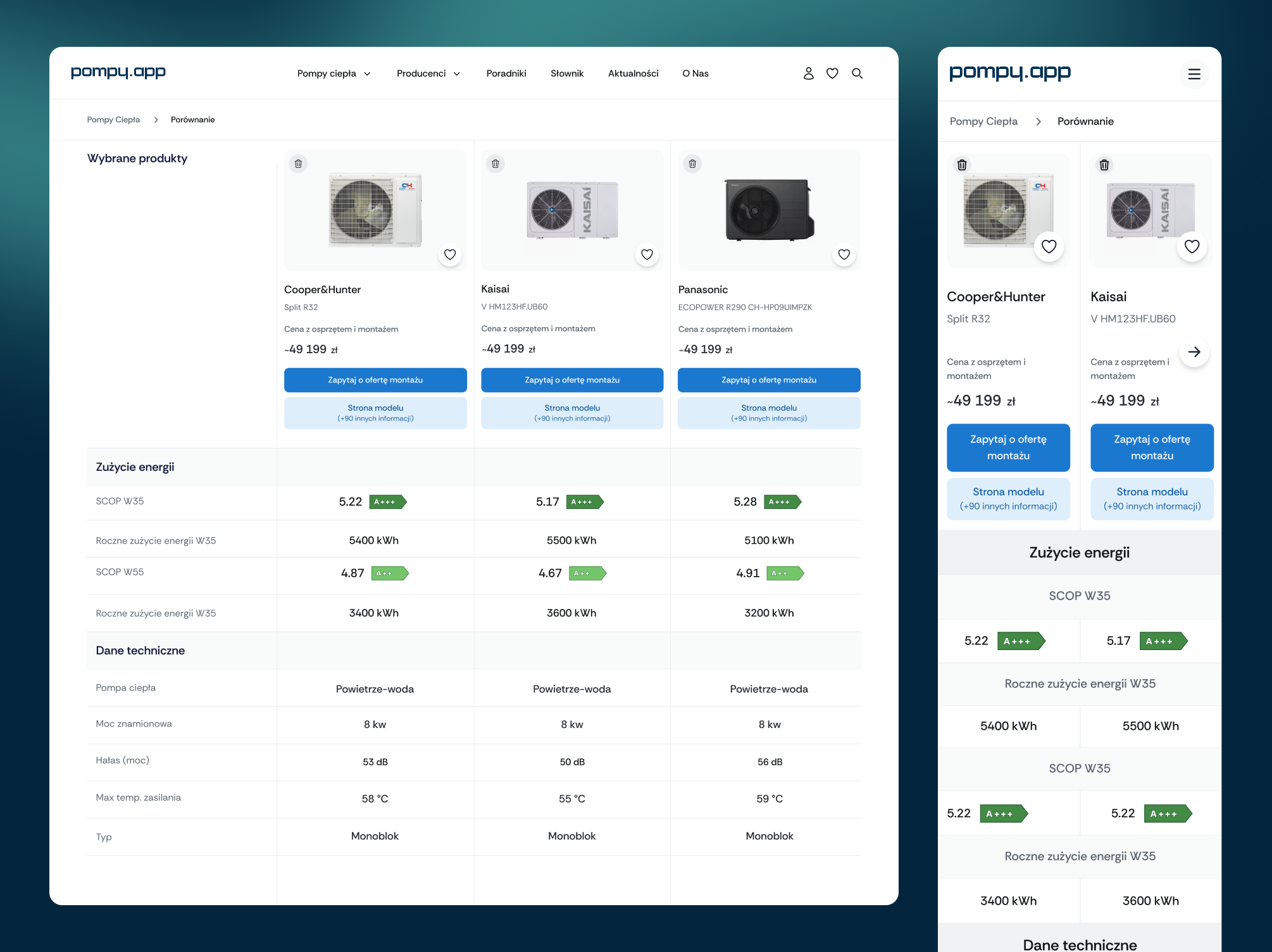
- Comparison tool - specifications of several selected models side by side in a single table.
- Content and data panel - a headless CMS with a PostgreSQL database and a metrics dashboard: new requests, most viewed models, comparison statistics.
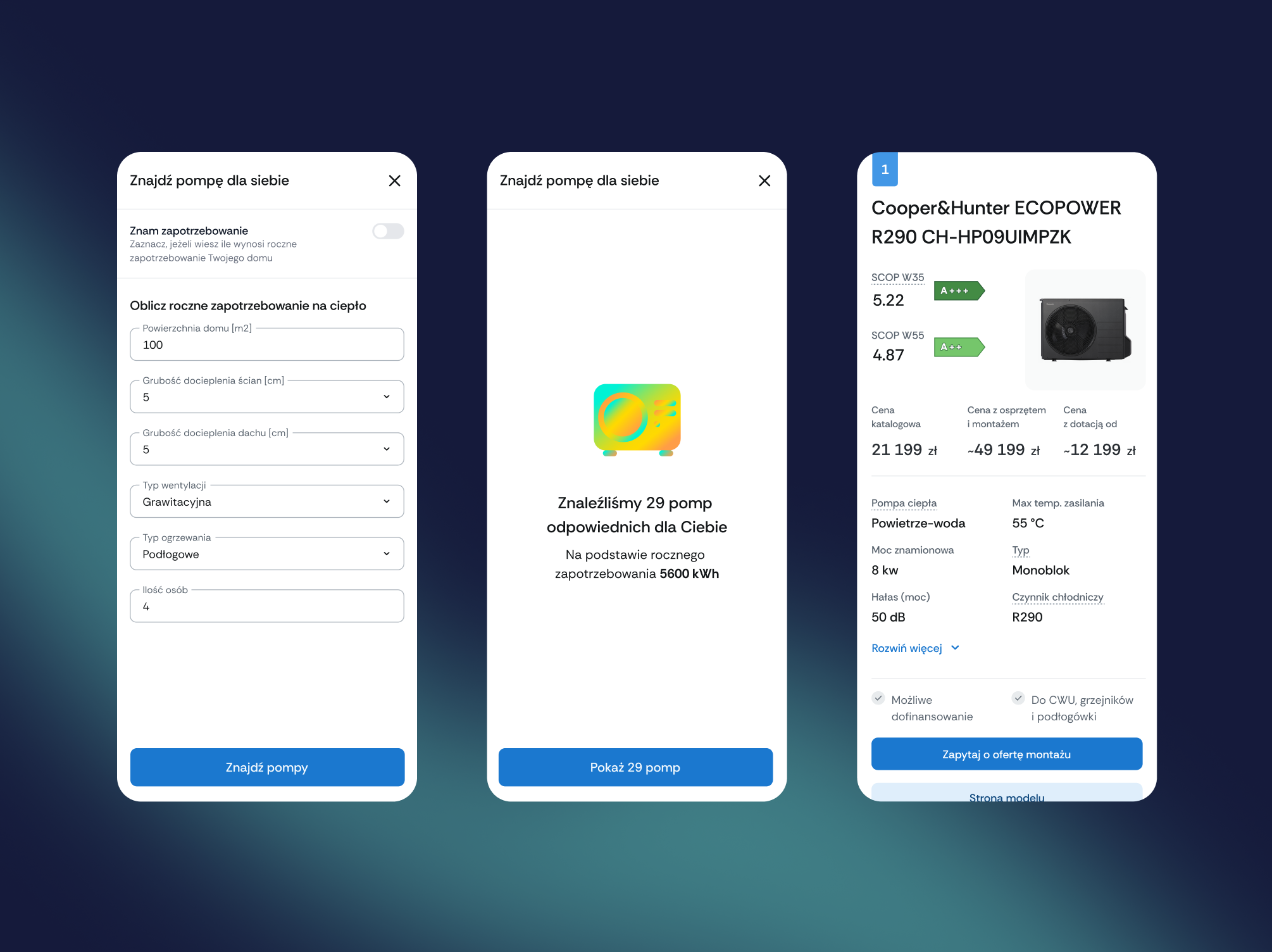
- Request handling - a form that collects details of the building, heating demand and location, routed automatically to the right adviser or installer.
Challenge: scattered data on heat pumps
Heat pump information was scattered across manufacturer websites and trade catalogues. There was no independent place to compare models from different brands.
The client came to us with an idea and an extensive data spreadsheet. The data needed thorough standardisation, but it was the starting point for a central platform. We had to turn raw data into a consistent, scalable system and, at the same time, design the whole product from scratch.
The service had to be friendly to someone looking for a heat pump for their home, and at the same time deliver valuable requests to installation companies.
Solution: filters, rankings and a heat pump comparison tool
Three tools take users from a general overview to a specific model: filters, rankings and the comparison tool.
Filters narrow the list by heating capacity, unit type, brand, refrigerant and price range. Rankings show recommended units in each category to people who are new to the subject. The comparison tool sets selected models out in a table, so differences in efficiency, noise, costs and warranty are visible on one screen.
From interest to request
At every stage, users can fill in a short quote request form. It collects contact details and information about their needs, and the request goes automatically to the right person along with the technical context the user provided.

Results: a product the client develops on their own
The client got a product they develop on their own: they add new models, content and guides without developers.
The database was designed so new records don't slow it down, and its content grows with the market. The architecture is modular, so adding new unit categories doesn't require rebuilding the system. The dashboard shows the number of requests, most viewed models and comparison statistics in real time, so decisions about further development are based on data.
Written by Radosław Kołacki Published Updated
Data that could become a product?
We start with a workshop where we agree what to build and in what order.

Blog
Learn from our experts
Practical articles on researching, designing and delivering digital products.
 Mobile apps
Custom mobile app: stages from diagnosis to development
A custom mobile app project has four phases: diagnosis, design, development and optimisation. We describe the decision made in each and what remains afterwards.
12 Jan 2025 · Radosław Kołacki
Read more
Mobile apps
Custom mobile app: stages from diagnosis to development
A custom mobile app project has four phases: diagnosis, design, development and optimisation. We describe the decision made in each and what remains afterwards.
12 Jan 2025 · Radosław Kołacki
Read more
-
 Mobile apps
How much does it cost to build a mobile app?
17 Jul 2024 · Radosław Kołacki
Mobile apps
How much does it cost to build a mobile app?
17 Jul 2024 · Radosław Kołacki
-
 Business
Event Storming: what it is and how to run a workshop
15 Jul 2024 · Radosław Kołacki
Business
Event Storming: what it is and how to run a workshop
15 Jul 2024 · Radosław Kołacki
-
Business and UX metrics
Engagement rate in a SaaS product: how to calculate it, with 2 examples
13 Dec 2023 · Radosław Kołacki