Case study
Kokosek: UX audit of a children's clothing shop before redesign
The premium shop Kokosek was due a redesign, and first it had to be clear what in the current version helps shoppers and what gets in their way. We ran a UX audit combining Google Analytics and Hotjar data, benchmarking and a heuristic review. The report of about 40 pages became the basis for the redesign.
For Kokosek we ran a UX audit that combined quantitative and qualitative data analysis, benchmarking and a heuristic review of the key purchase paths. The report of around 40 pages, with a list of issues and recommendations, became the foundation for a complete redesign of the shop.
Scope of work
- Industry
- E-commerce and retail
- Product type
- E-commerce UX audit
- Market
- E-commerce / premium children's clothing
Technologies
- e-commerce
- Product discovery
Key facts
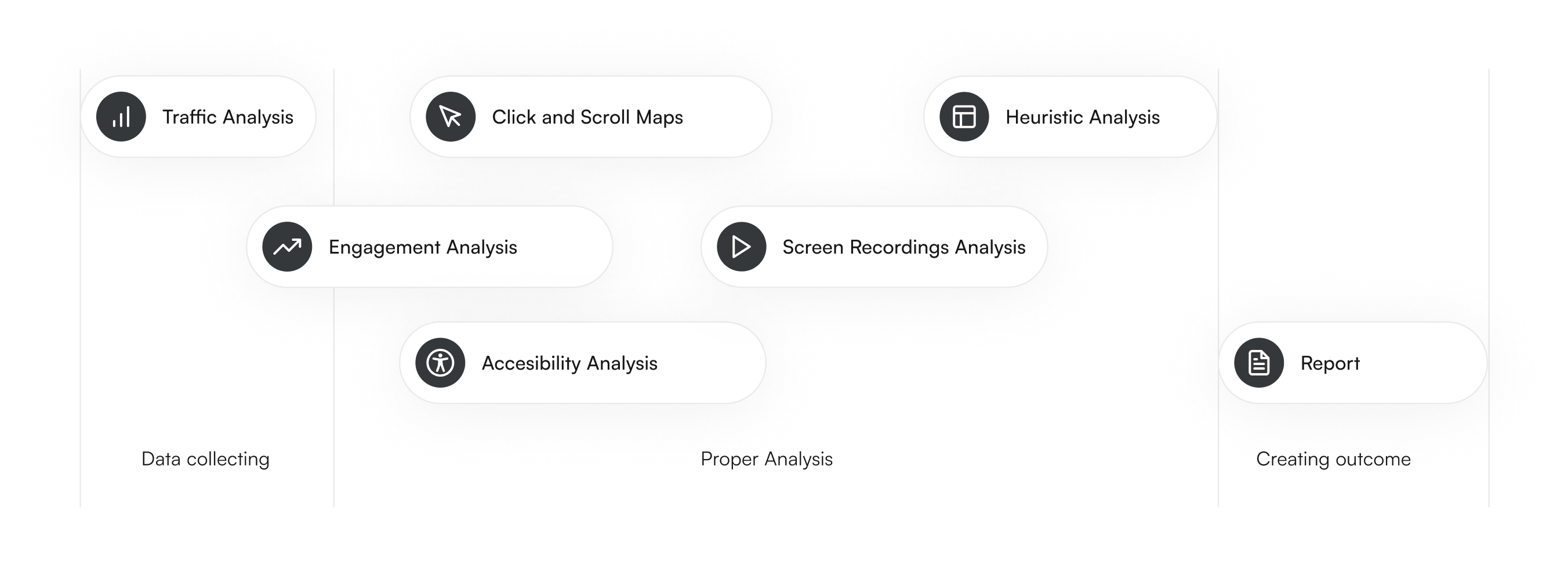
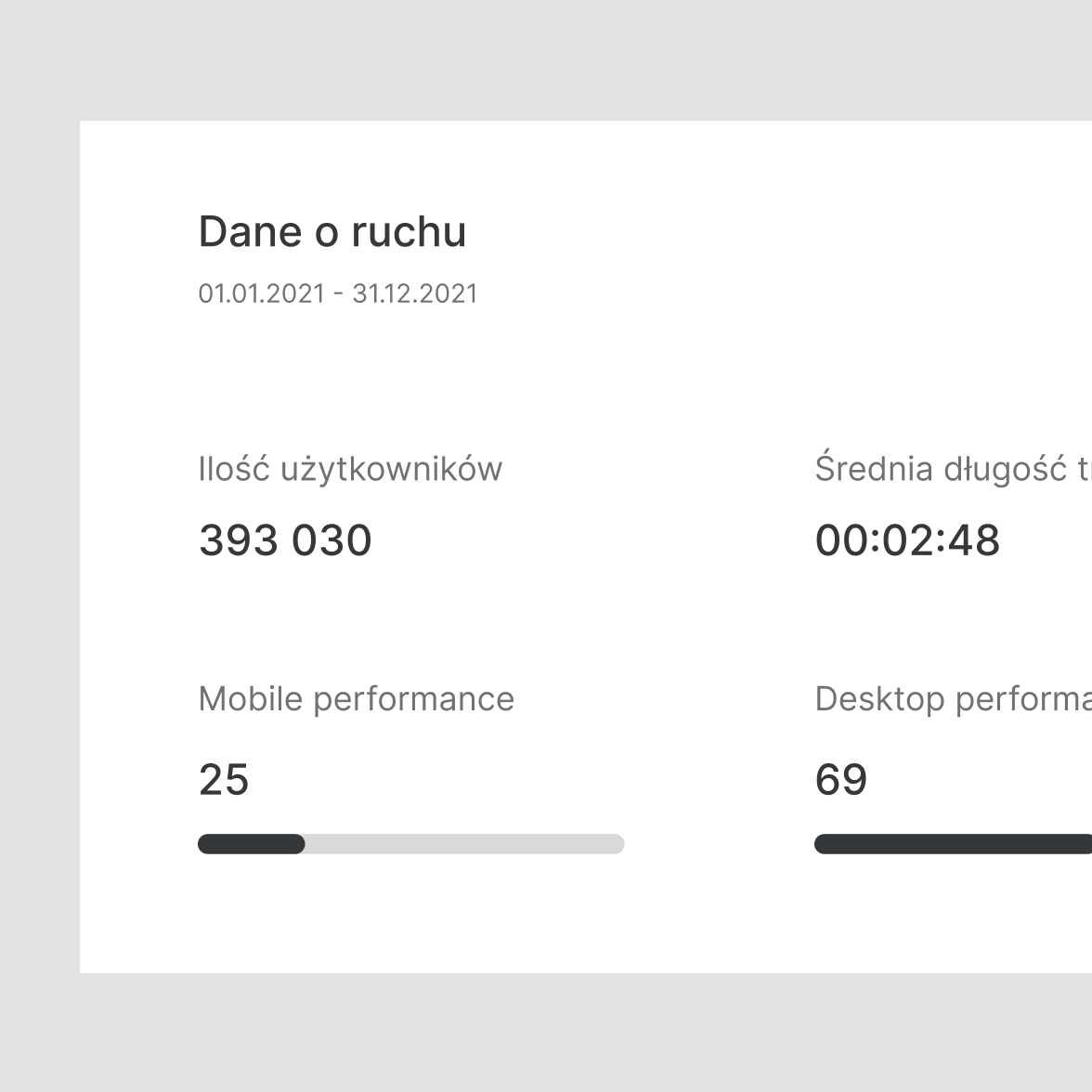
- Traffic and behaviour data from Google Analytics and Hotjar
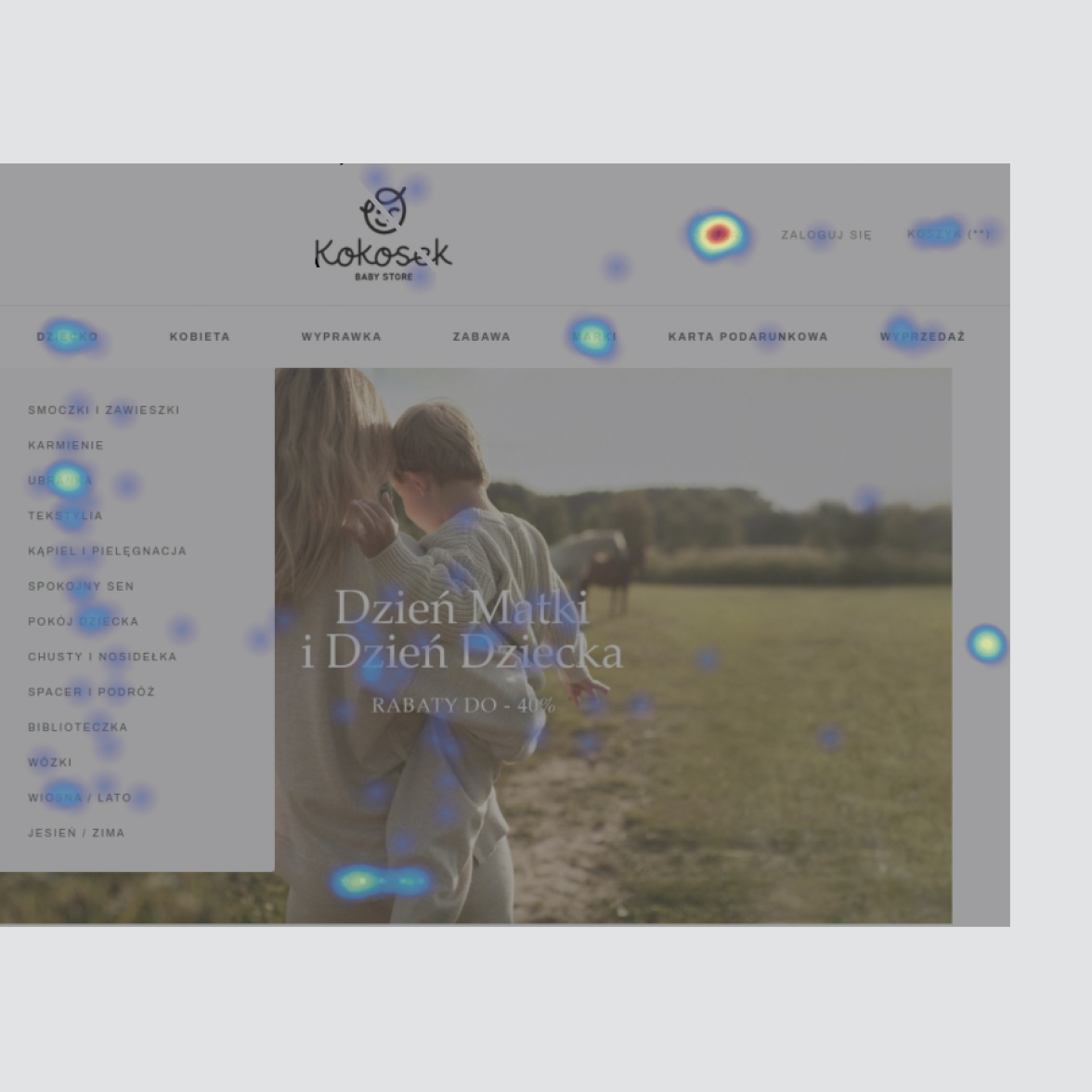
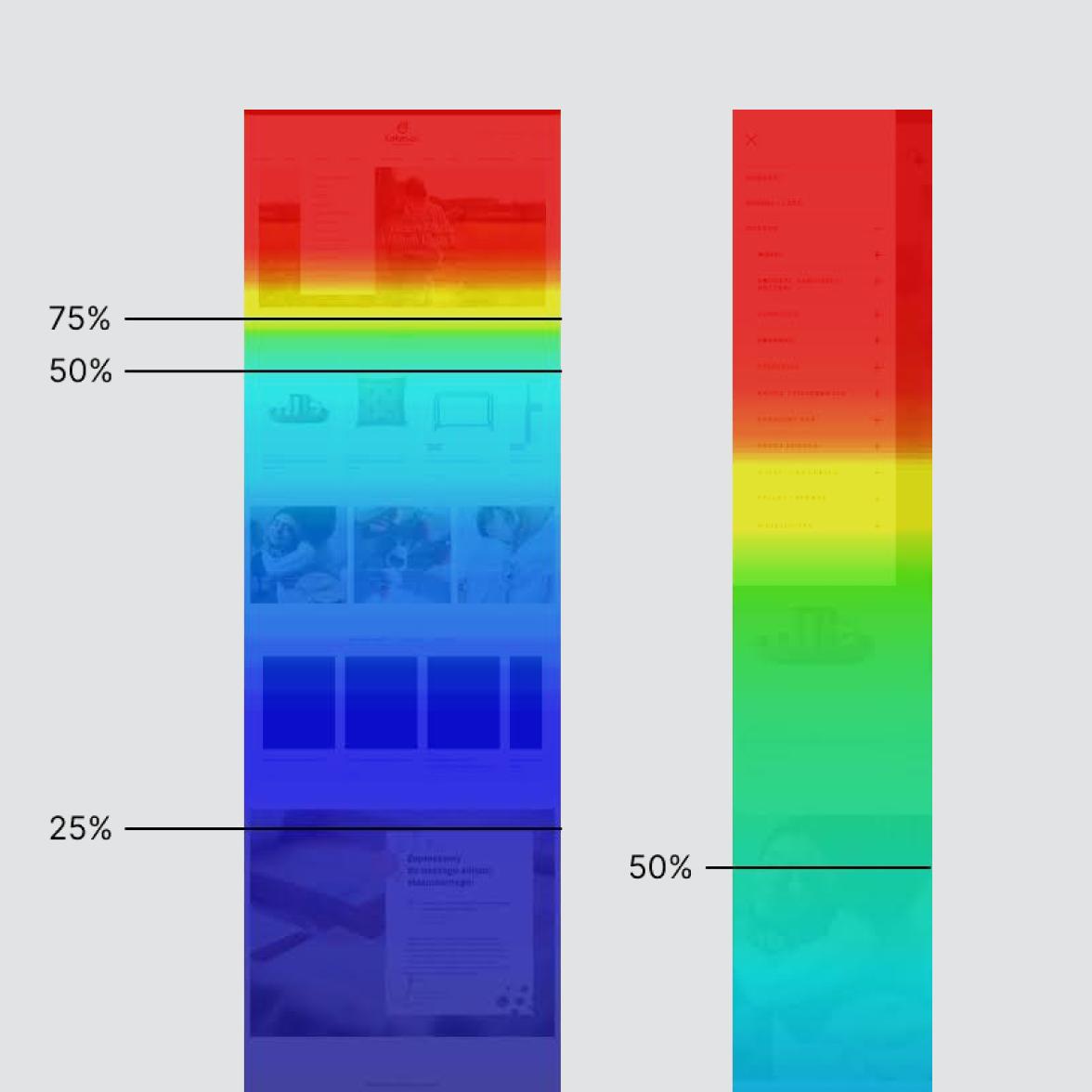
- Heatmaps and scroll analysis
- Benchmarking based on Baymard Institute and NN Group research
- Heuristic analysis of filtering, product page and basket
- A report of around 40 pages
- The audit as the basis for a complete shop redesign
Before the new shop design was drawn, we used data and best practice to find out what gets in customers' way.
Goals
01
A picture of customer behaviour
Use Google Analytics and Hotjar data to see how customers move through the shop and where they leave it.
02
A point of reference
Assess the shop against competitors and the e-commerce best practice documented by Baymard Institute and NN Group.
03
A foundation for the redesign
Prepare a list of issues and recommendations that the shop redesign can be built on.
Process
What we delivered
A report that kicked off the next stage of the project: a complete redesign of the shop.
- Detailed report - around 40 pages covering the findings from every stage of the analysis.
- Heatmaps and scroll analysis - the sections that attract the most attention and the places where users most often leave the site.
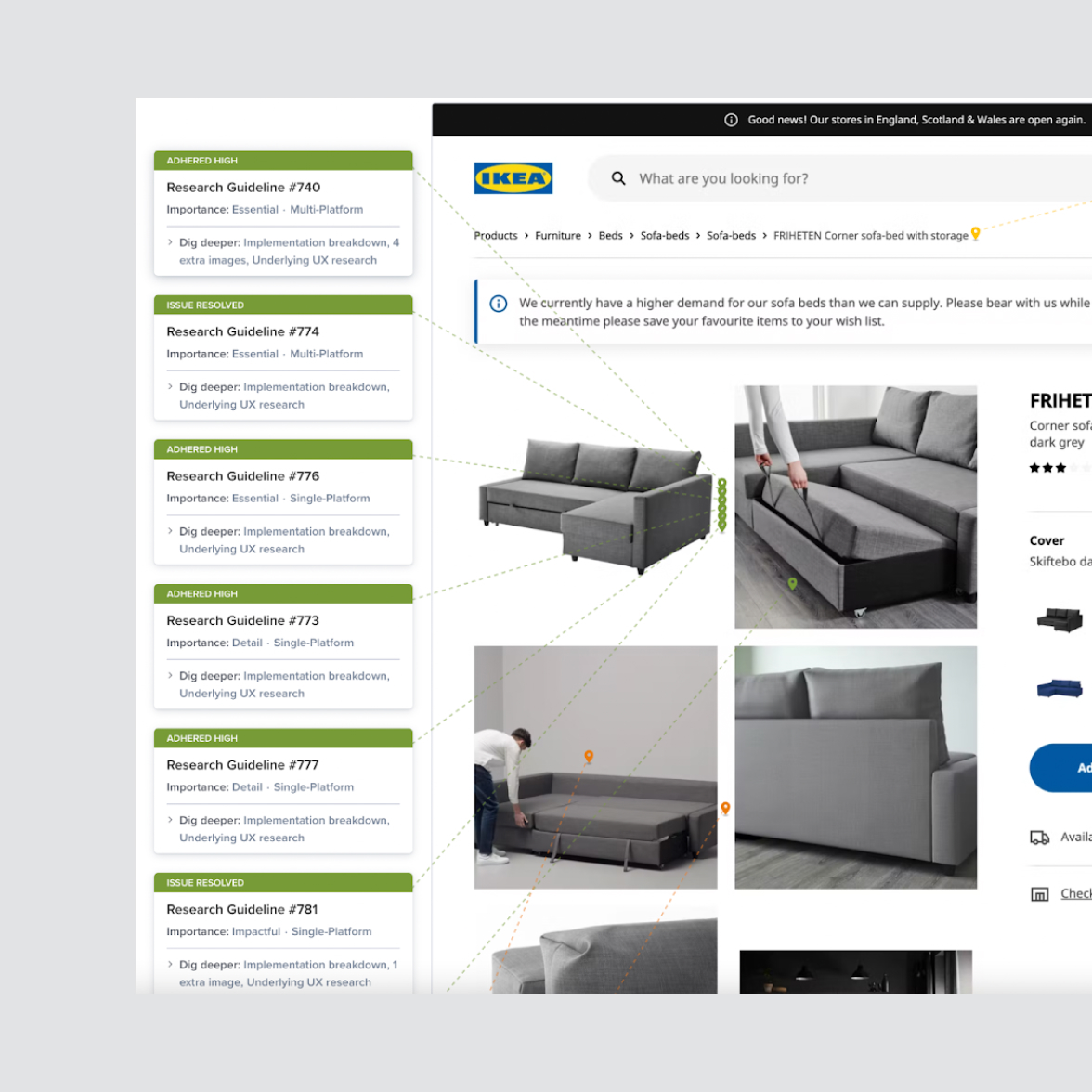
- Benchmarking - an assessment of the shop against competitors and best practice from Baymard Institute and NN Group.
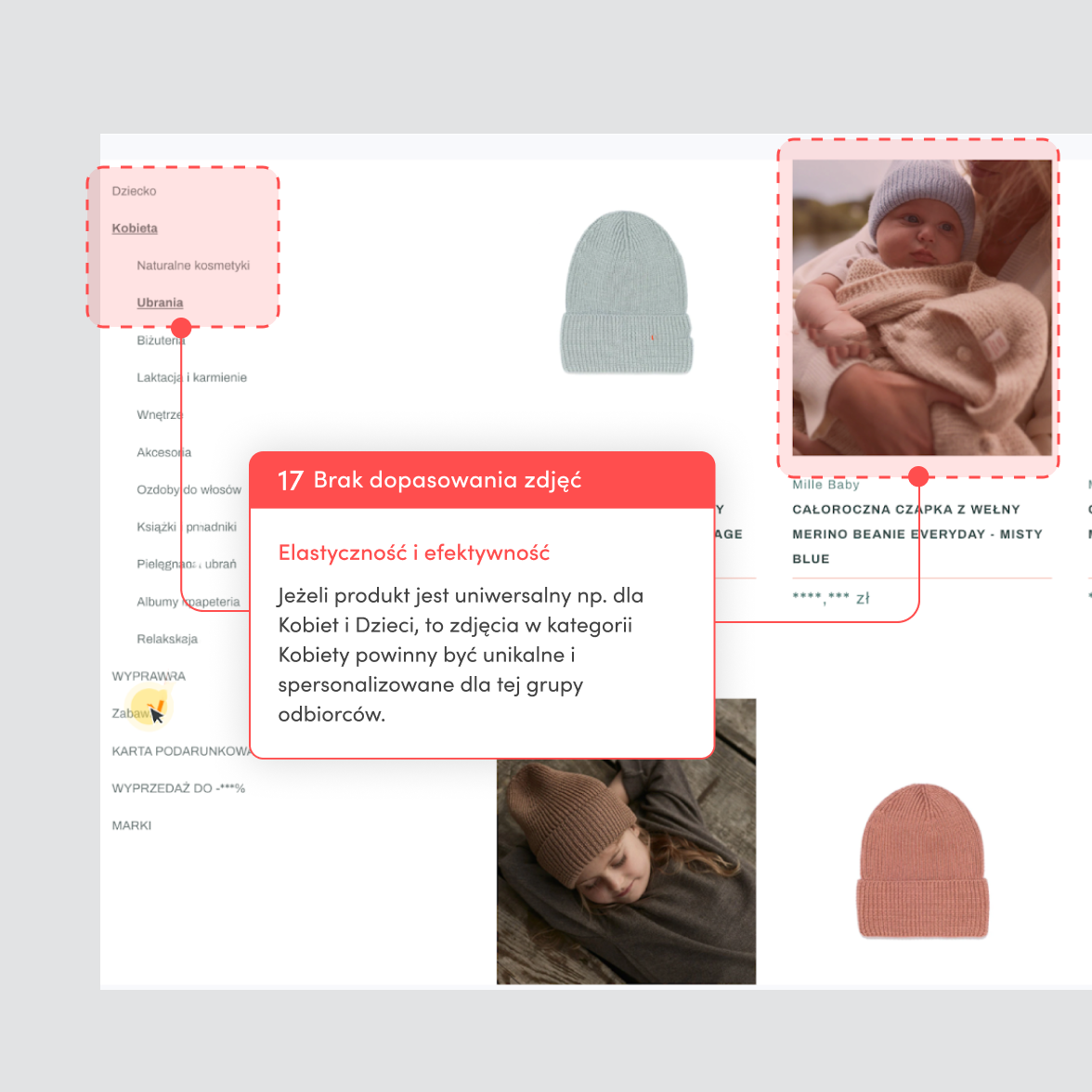
- Key issues - elements of filtering, the product page and the basket that can make buying harder.
- Recommendations - proposed UX improvements that served as the basis for the redesign.
Challenge: establishing the facts before a redesign
Kokosek is one of the leading premium children's clothing shops. A redesign was due, and before it started we needed to establish what in the current version helps people buy and what gets in the way.
The recommendations had to reflect how customers actually use the site and follow industry best practice. That is why the audit combined analytics data, a competitor comparison and a heuristic evaluation. The aim was changes that would increase engagement and conversion.
The audit was meant to give the redesign a foundation: knowing what to fix before the first screen is designed.
Analysis: data, benchmarking and heuristic review
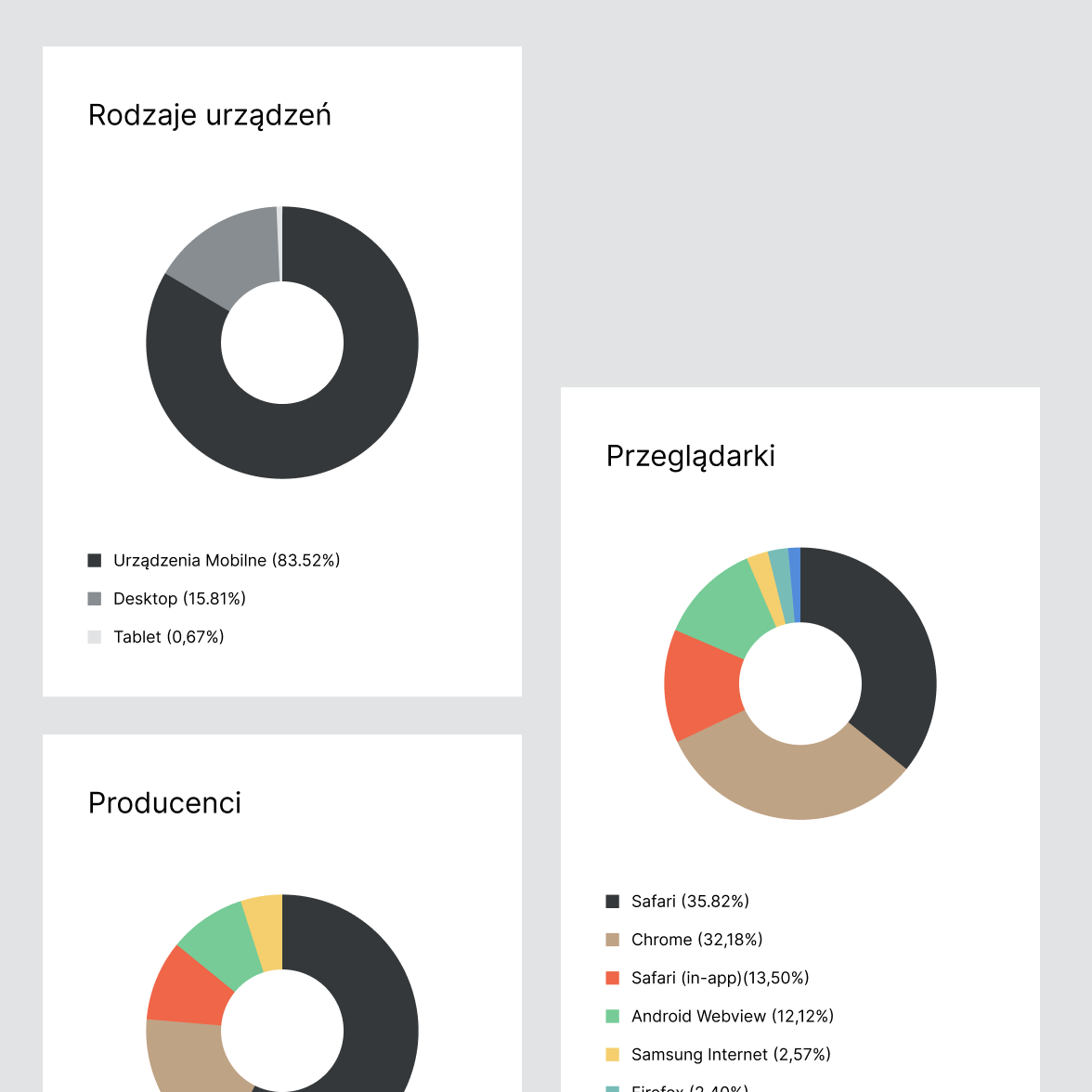
We ran the audit on three levels: user behaviour data, a comparison with best practice and a heuristic review of the key paths.
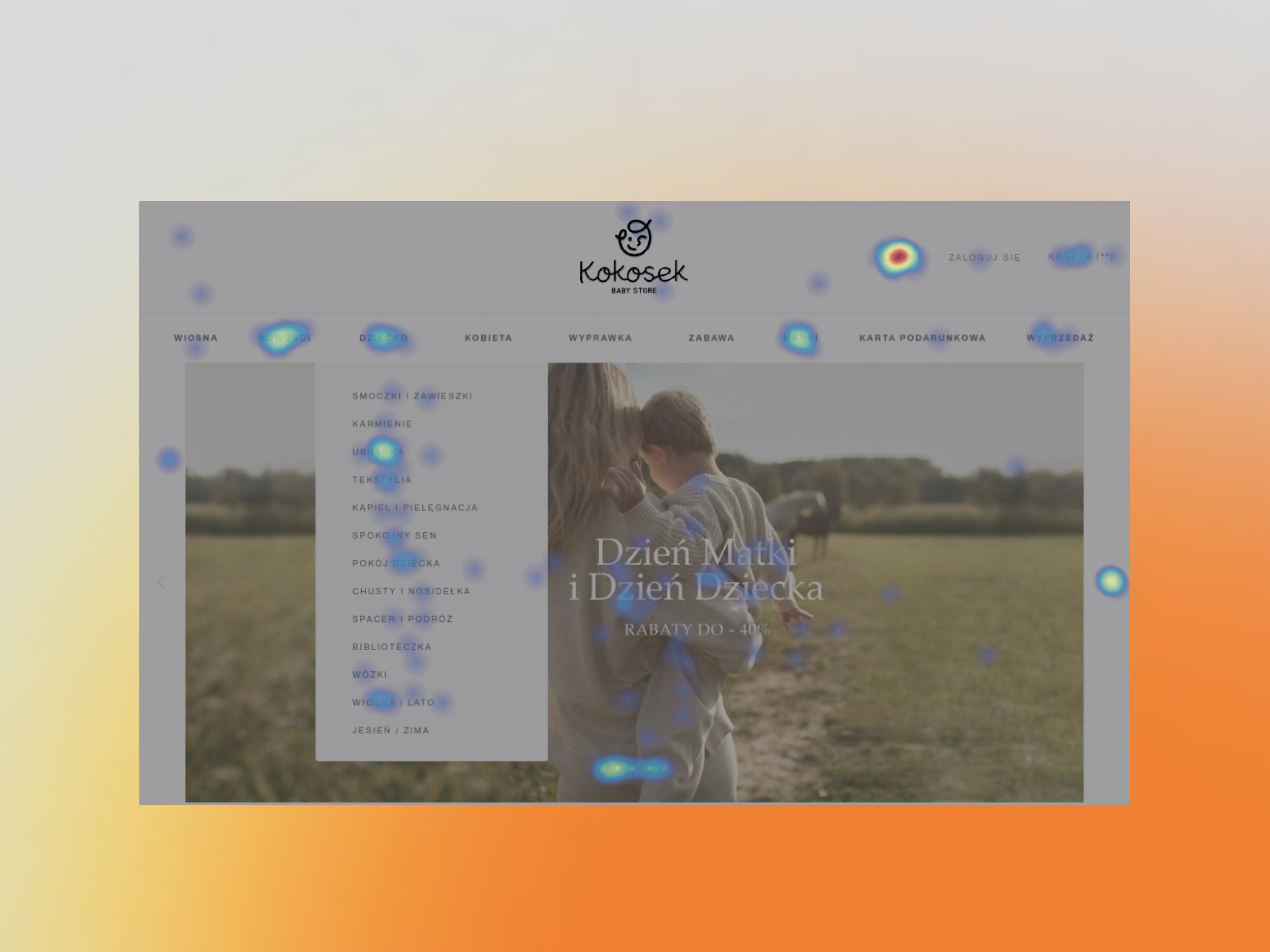
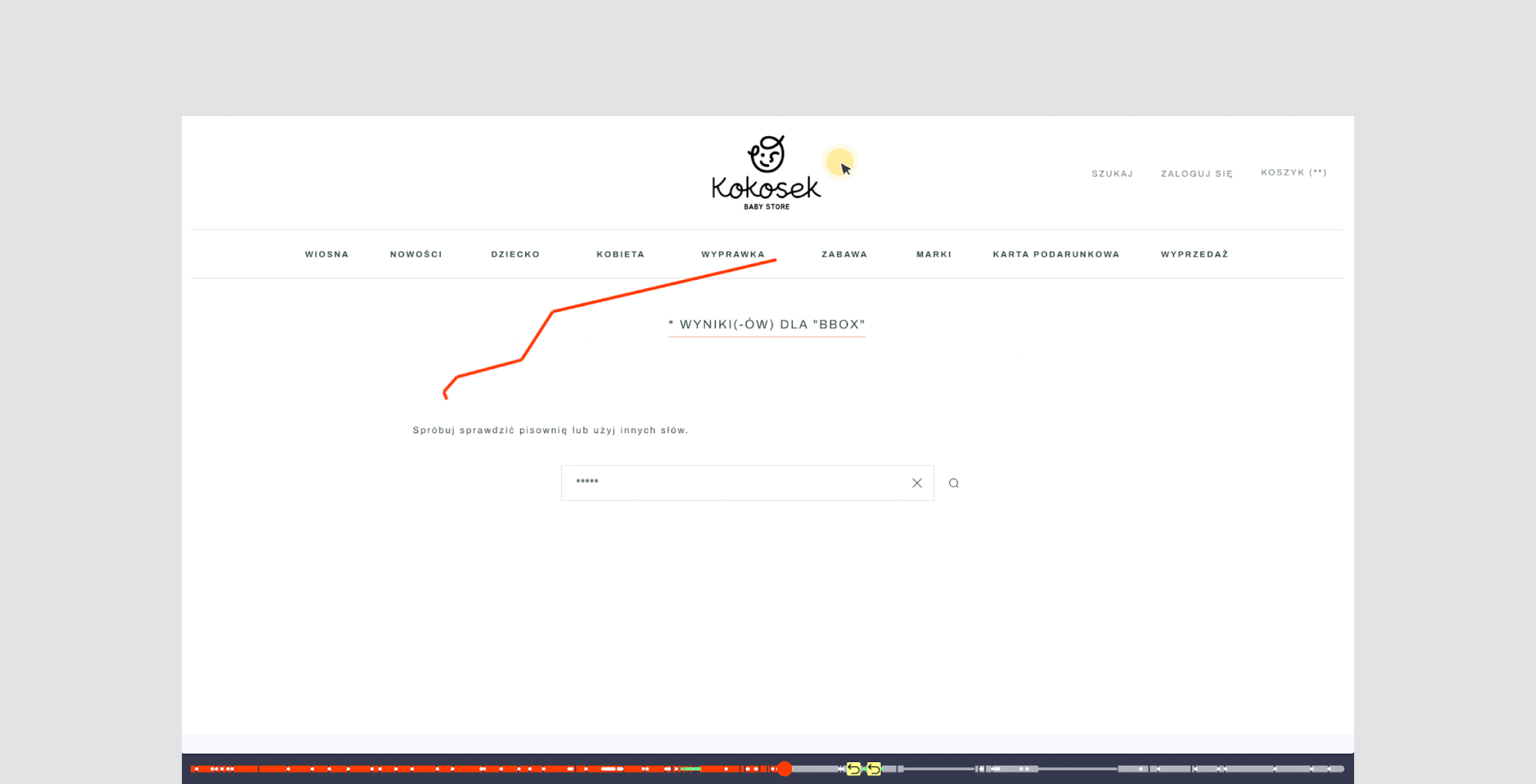
Hotjar heatmaps and scroll analysis showed which sections attract the most attention and where users most often leave the site. Benchmarking based on Baymard Institute and NN Group research showed how Kokosek compares with competitors and which elements are worth optimising.
The purchase path under the microscope
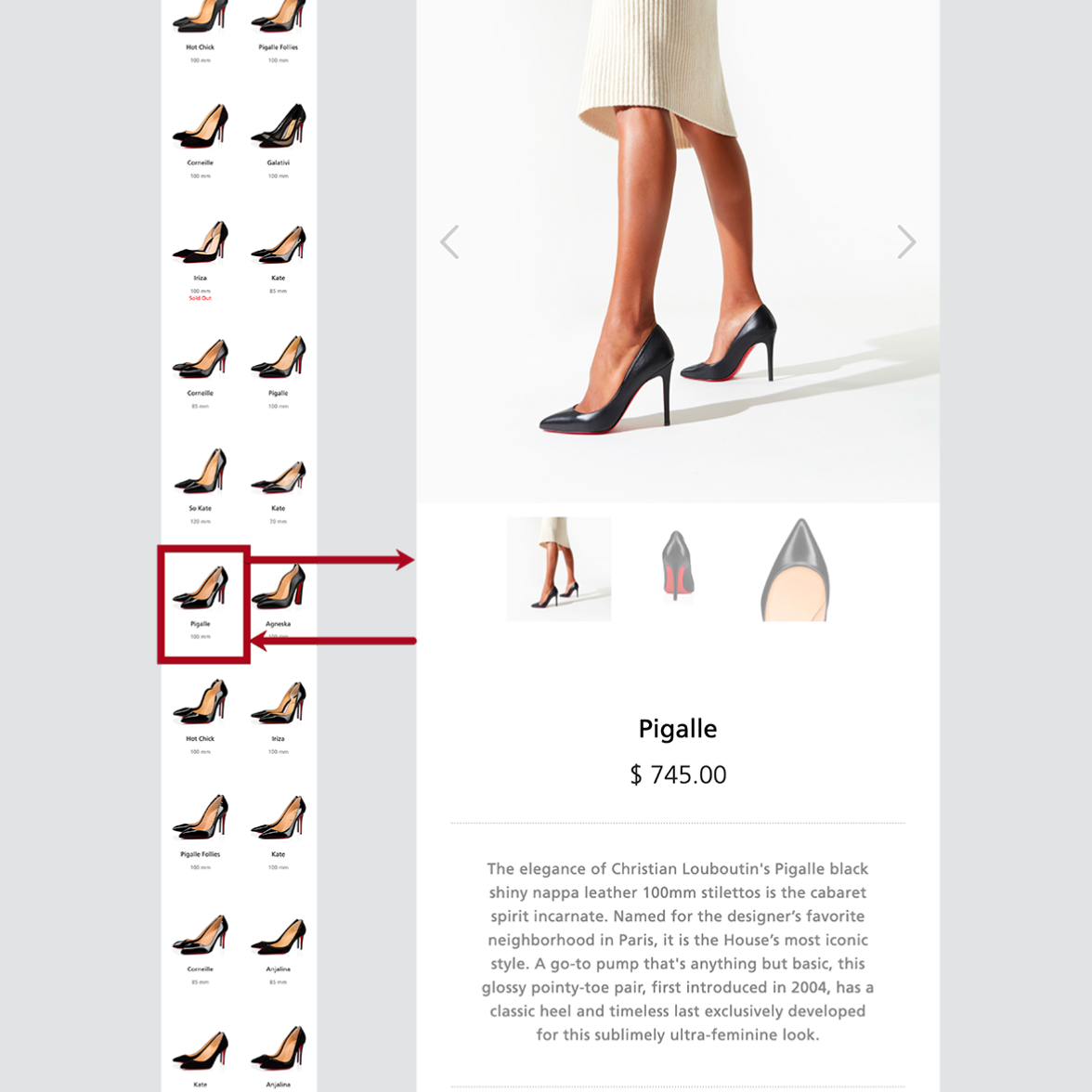
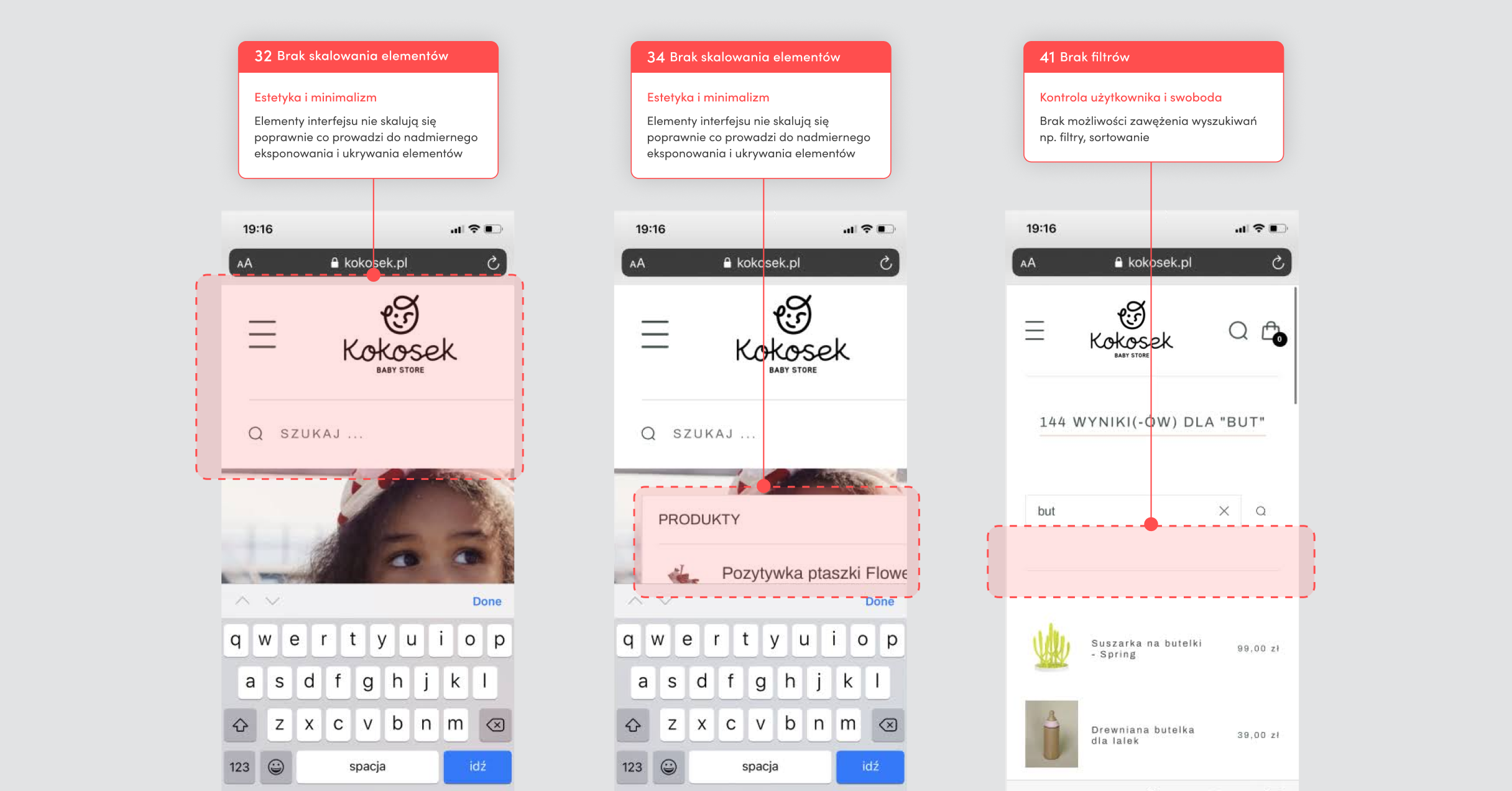
In the heuristic analysis we went through product filtering, the product page and the basket. We looked for elements that act as barriers for users and hold back conversion.
Results: the report the redesign started from
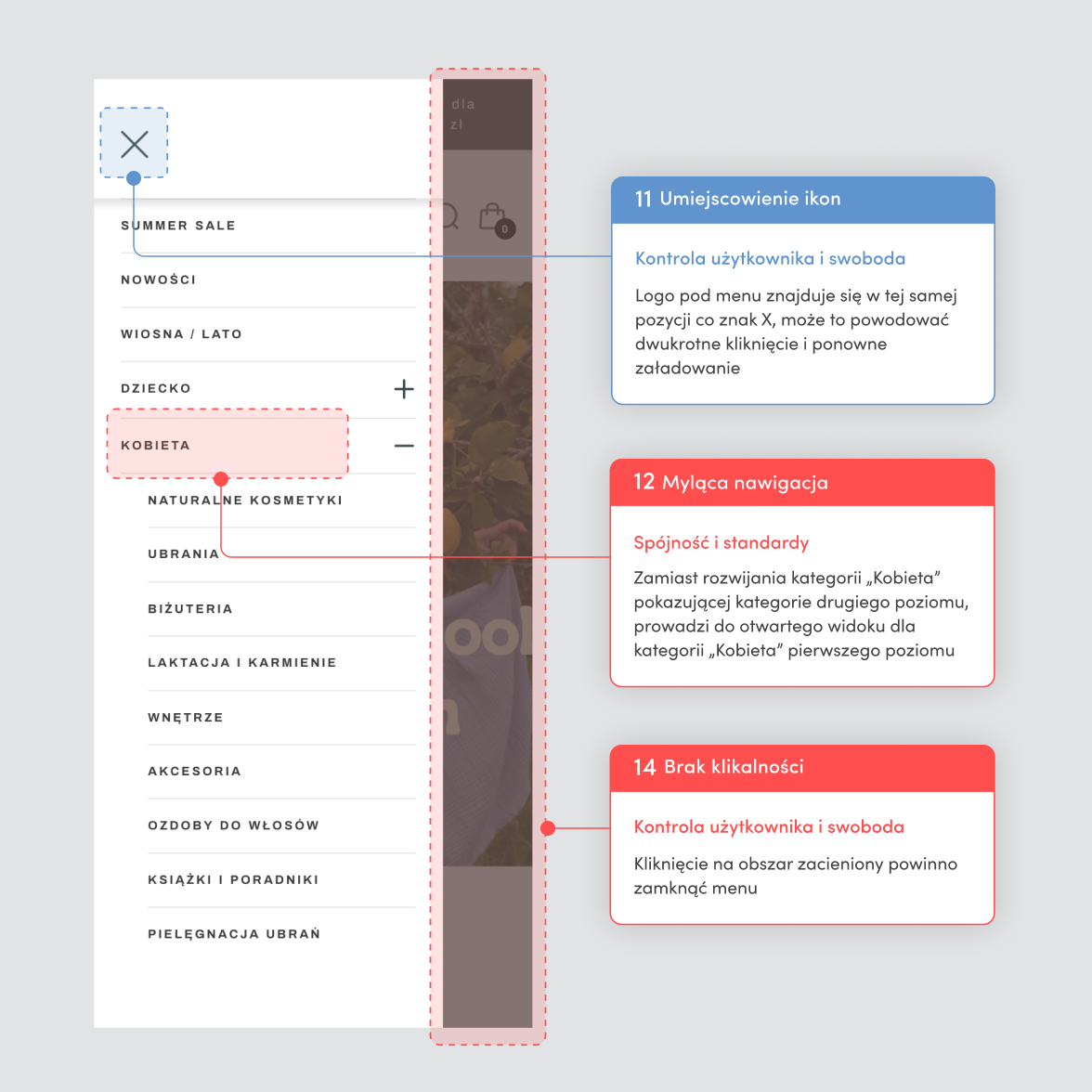
The Kokosek team received a report of around 40 pages: analysis findings, heatmaps, key issues and recommended UX improvements.
The report became the foundation for the next stage of the project, a complete redesign of the shop. Design work started from a list of specific issues backed by data and industry best practice.
Written by Radosław Kołacki Published Updated
A shop redesign is best started with an audit.
We look at the data, the purchase path and best practice before any new design is drawn.


Blog
Learn from our experts
Practical articles on researching, designing and delivering digital products.
 Mobile apps
Custom mobile app: stages from diagnosis to development
A custom mobile app project has four phases: diagnosis, design, development and optimisation. We describe the decision made in each and what remains afterwards.
12 Jan 2025 · Radosław Kołacki
Read more
Mobile apps
Custom mobile app: stages from diagnosis to development
A custom mobile app project has four phases: diagnosis, design, development and optimisation. We describe the decision made in each and what remains afterwards.
12 Jan 2025 · Radosław Kołacki
Read more
-
 Mobile apps
How much does it cost to build a mobile app?
17 Jul 2024 · Radosław Kołacki
Mobile apps
How much does it cost to build a mobile app?
17 Jul 2024 · Radosław Kołacki
-
 Business
Event Storming: what it is and how to run a workshop
15 Jul 2024 · Radosław Kołacki
Business
Event Storming: what it is and how to run a workshop
15 Jul 2024 · Radosław Kołacki
-
Business and UX metrics
Engagement rate in a SaaS product: how to calculate it, with 2 examples
13 Dec 2023 · Radosław Kołacki