
Case study
Imagine Stories: an AI app for dyslexia and ADHD therapy
Speech therapists, therapists and parents lacked stories tailored to a particular child. We designed and built Imagine Stories: a web app with generative AI that creates texts and illustrations for children with dyslexia and ADHD, with control over typeface, background and reading pace.

3
AI models in the product: OpenAI, Anthropic Claude, Stable Diffusion
WCAG 2.1
criteria 1.4.3 and 1.4.8 implemented with people with dyslexia in mind
2
dyslexia-friendly fonts: Lexend and OpenDyslexic
We designed and built Imagine Stories: from product workshops, through wireframes and high-fidelity prototypes, to a Next.js/React app integrated with OpenAI, Anthropic Claude and Stable Diffusion. The platform generates text and illustrations in real time and lets users adapt how they are presented to each child's needs.
Scope of work
- Industry
- Training and education
- Product type
- Generative AI web app
- Market
- Education and therapy (speech therapy)
Technologies
-
 OpenAI
 -
Anthropic
- Stable Diffusion
-
Replicate
-
Vercel
-
Next.js
 OpenAI
 Anthropic
 Replicate
 Vercel
 Next.js
Key facts
- Text and illustrations generated in real time
- Predefined characters and scenes, plus custom story elements
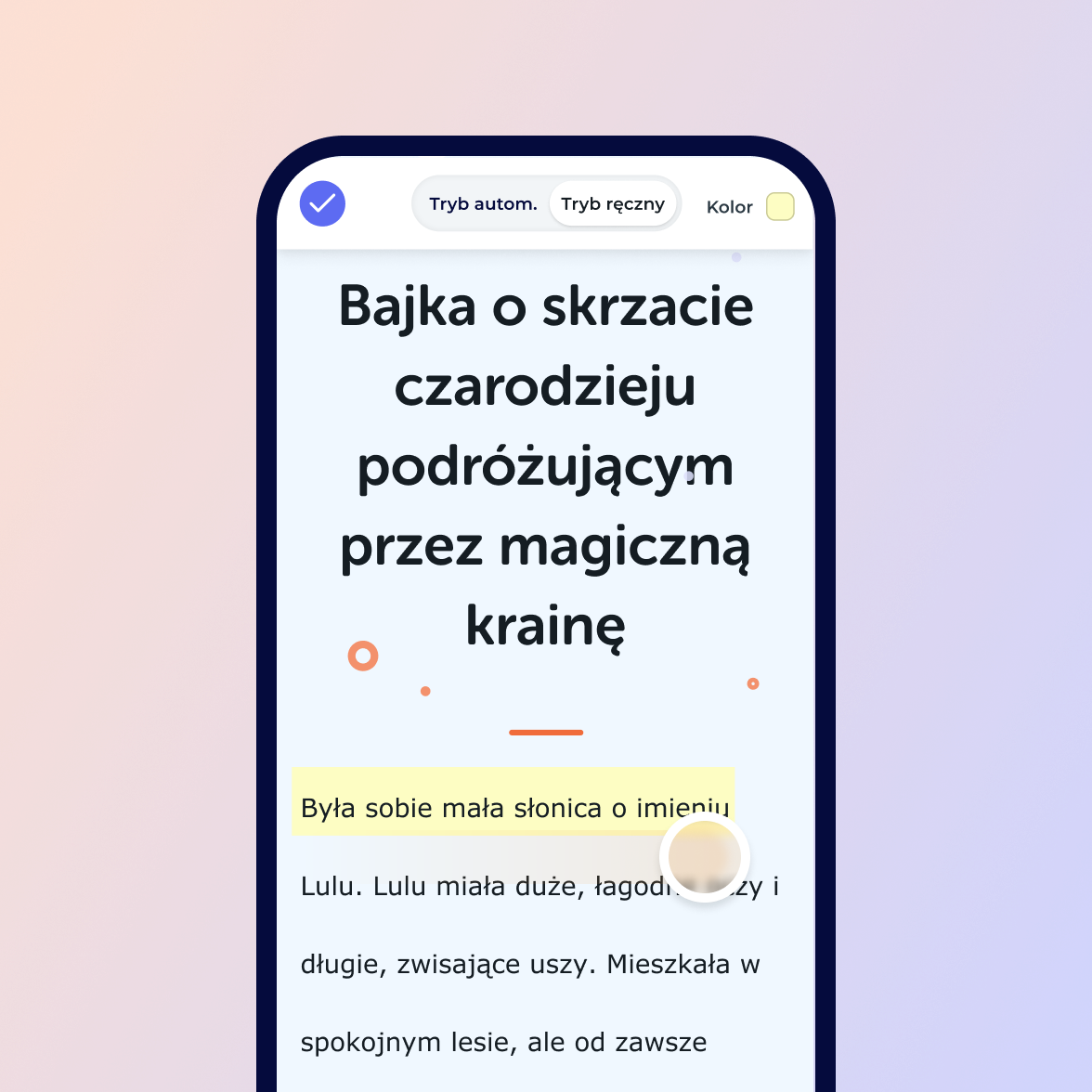
- Font, colour and background editing to suit each patient
- A player that matches reading pace to the child's abilities
- Lexend and OpenDyslexic fonts and backgrounds with tuned contrast
- Next.js/React with OpenAI, Anthropic Claude and Stable Diffusion integration
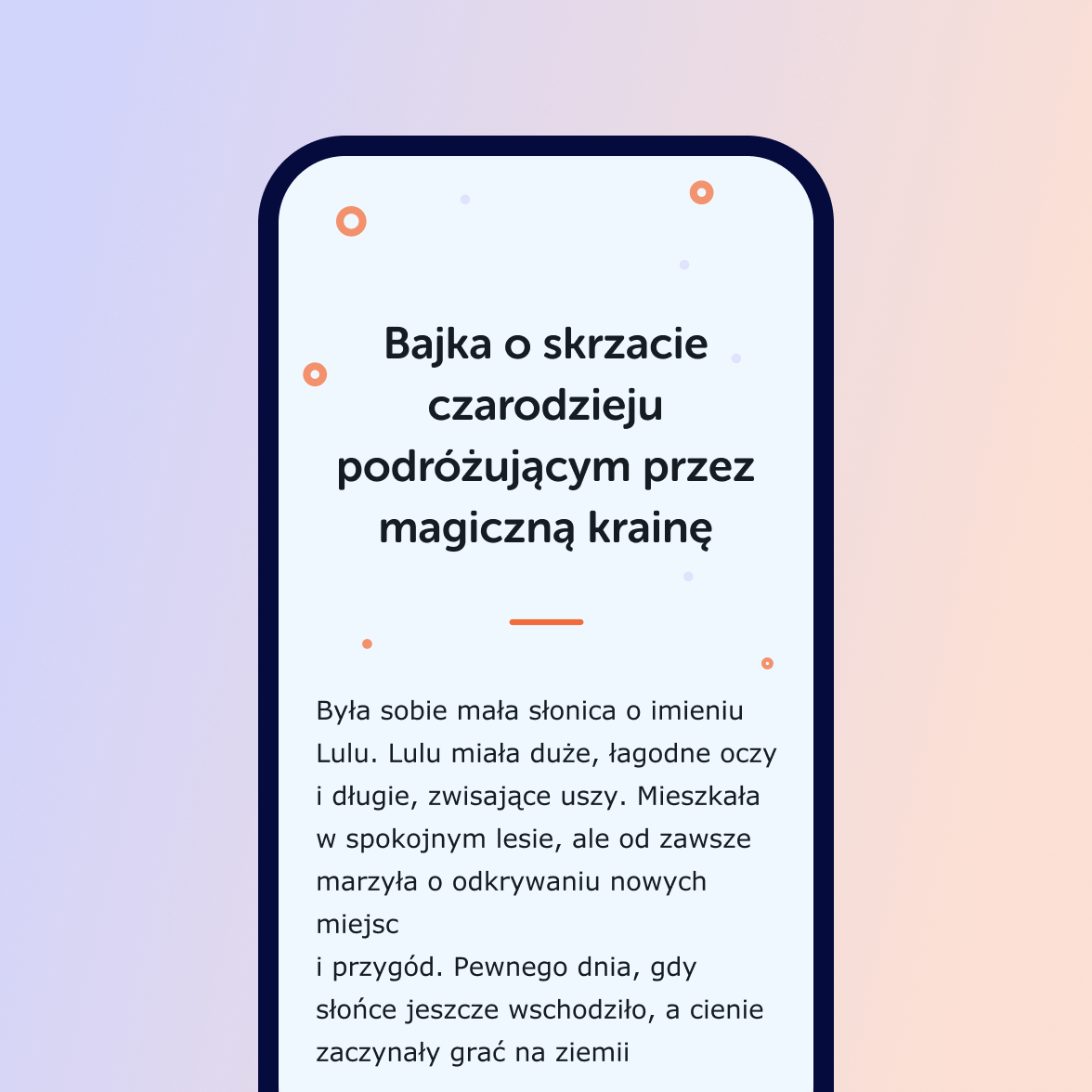
Reading therapy stories that are created on the fly and can be tailored to a specific child.

Goals
01
Materials on demand
Address the shortage of speech therapy materials with a tool that generates new stories.
02
Tailored to the child
Let users set characters, scenes, reading pace and text appearance to each patient's individual needs.
03
Text that is easier to read
Meet the WCAG 2.1 criteria for visual presentation and contrast, with people with dyslexia in mind.
Process
What we delivered
A platform where a story is created, tailored to the patient and used for reading practice.
- Story generation - text and illustrations created in real time and adapted to each new part of the story.
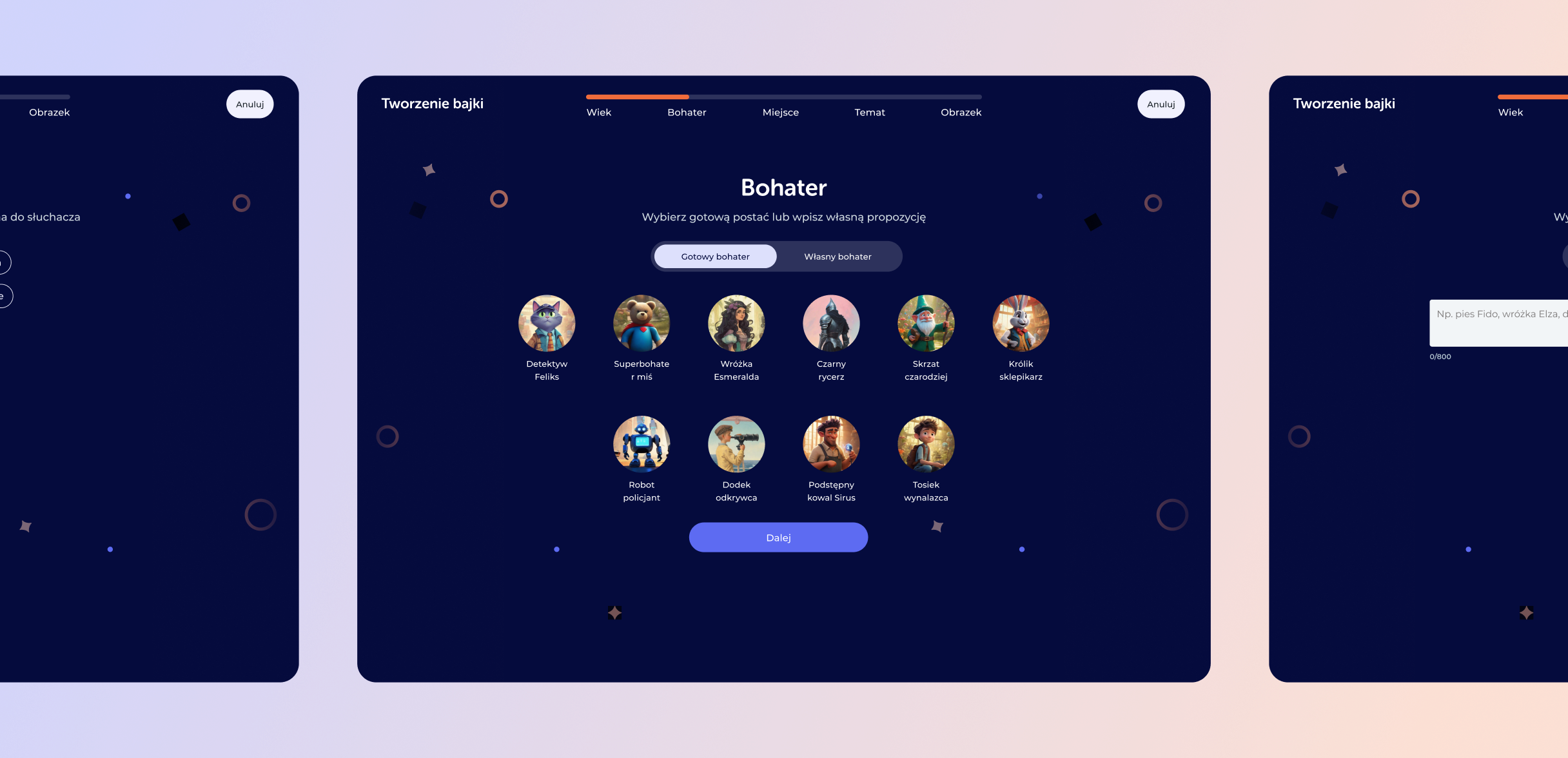
- Characters and scenes - predefined elements to choose from, with the option to add your own.
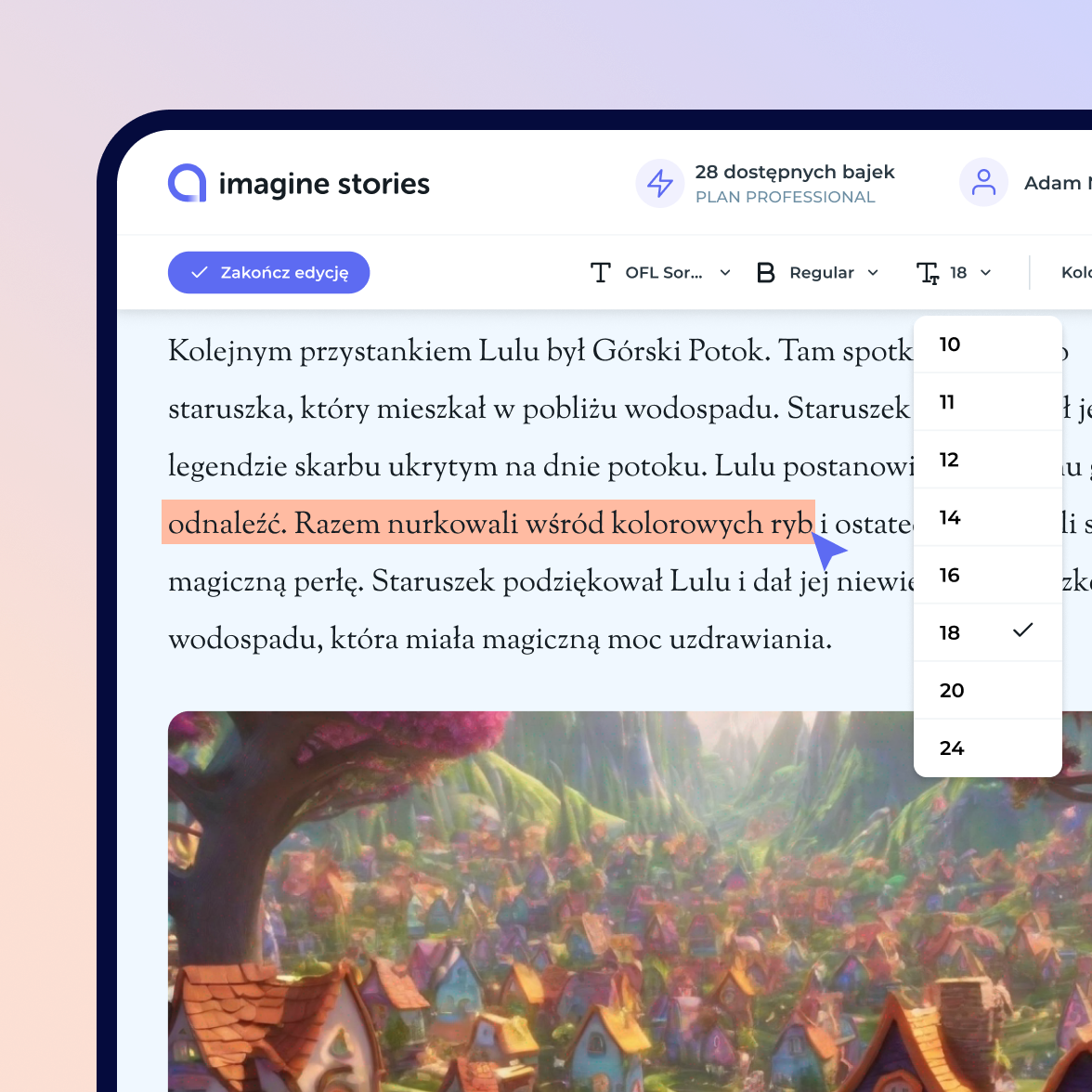
- Editing and personalisation - changing fonts, colours and backgrounds, e.g. for people with colour blindness or visual impairments.
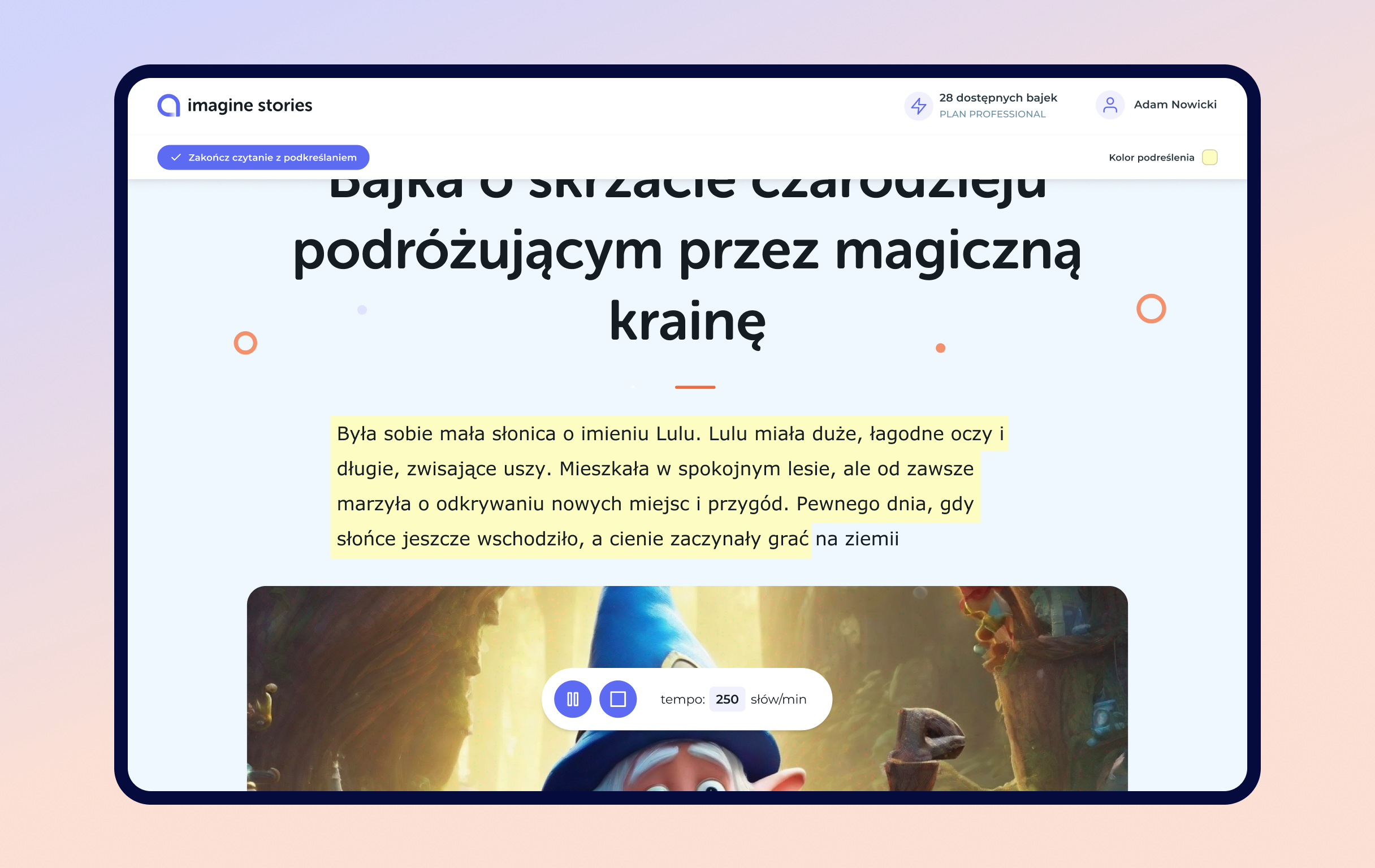
- Player - reading pace set by the therapist to match the child's abilities.
- Dyslexia support - switching between Lexend and OpenDyslexic fonts, and text backgrounds with research-based contrast.
- Development - a Next.js/React app integrated with OpenAI, Anthropic Claude and Stable Diffusion.
Challenge: too few materials for reading therapy
The project addresses a shortage of speech therapy materials. Speech therapists, therapists and parents need stories tailored to each child's individual needs, and there are too few ready-made texts.
Text alone isn't enough. For children with dyslexia, presentation matters too: typeface, background colour and contrast, and in reading therapy, pace as well. The product had to combine generative AI with tools that let users control all of this.
The tool had to be functional and, at the same time, fit the specific requirements of therapists and parents.
Solution: a story generated and tailored to the child
Users build a story from predefined characters and scenes or add their own elements, and AI generates the text and illustrations on the fly.
Stories and images adapt to each new part of the narrative, so the storyline stays flexible and every story can unfold differently. The finished text can be edited: font, colours and background can be changed, e.g. for colour blindness or visual impairments. The player matches reading pace to the patient's abilities, and the therapist sets it for a specific child.
Support for people with dyslexia
The accessibility features meet WCAG 2.1 criteria 1.4.8 (Visual Presentation) and 1.4.3 (Contrast). Users switch between the Lexend and OpenDyslexic fonts, which make letters easier to recognise, and choose the text background colour. The colour choices are based on the study by Rello and Baeza-Yates, "Good Background Colors for Readers: A Study of People with and without Dyslexia".

Results: therapy material created on the spot
Speech therapists, therapists and parents got a tool in which therapy material is created on the fly and can be tailored to the child straight away.
One platform combines content and illustration generation, text presentation settings and a player with adjustable pace. A therapist can prepare a new story and immediately set it up for a patient's needs, instead of searching for ready-made materials.

Written by Radosław Kołacki Published Updated
An idea for a generative AI product?
We start with a workshop where we agree who it should help, and with what.


Blog
Learn from our experts
Practical articles on researching, designing and delivering digital products.
 Mobile apps
Custom mobile app: stages from diagnosis to development
A custom mobile app project has four phases: diagnosis, design, development and optimisation. We describe the decision made in each and what remains afterwards.
12 Jan 2025 · Radosław Kołacki
Read more
Mobile apps
Custom mobile app: stages from diagnosis to development
A custom mobile app project has four phases: diagnosis, design, development and optimisation. We describe the decision made in each and what remains afterwards.
12 Jan 2025 · Radosław Kołacki
Read more
-
 Mobile apps
How much does it cost to build a mobile app?
17 Jul 2024 · Radosław Kołacki
Mobile apps
How much does it cost to build a mobile app?
17 Jul 2024 · Radosław Kołacki
-
 Business
Event Storming: what it is and how to run a workshop
15 Jul 2024 · Radosław Kołacki
Business
Event Storming: what it is and how to run a workshop
15 Jul 2024 · Radosław Kołacki
-
Business and UX metrics
Engagement rate in a SaaS product: how to calculate it, with 2 examples
13 Dec 2023 · Radosław Kołacki